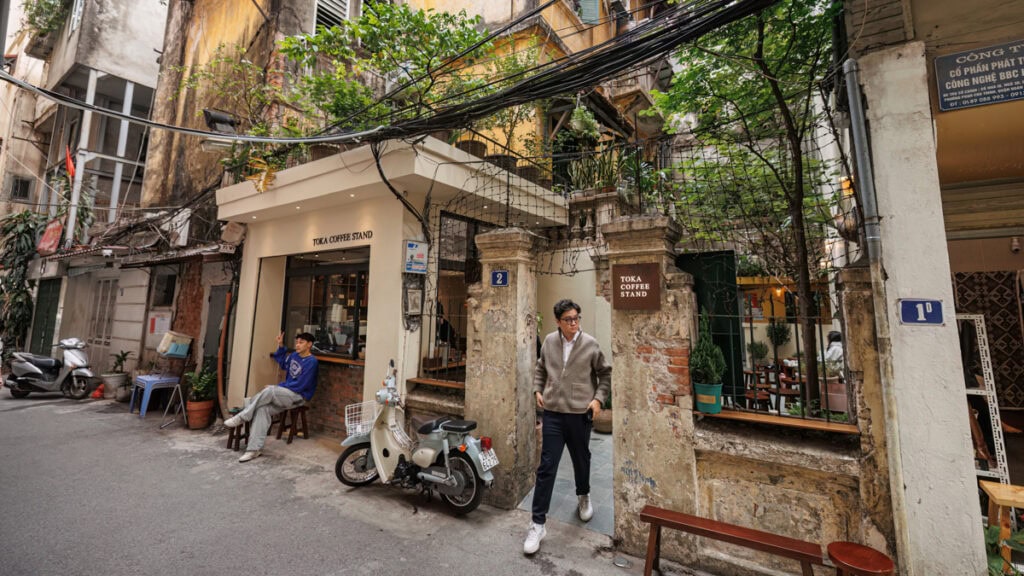
Unbeknownst to most, a lush islet in Bình Dương province, about 50 kilometers from Ho Chi Minh City, is still sprawling with tranquil village life. The locality known as Cù Lao Bạch Đằng is home to many Vietnamese and ethnic Chinese families who began settling in the area as early as the early 18th Century to take advantage of the islet’s fertile soil to grow a wide variety of crops.
Evidently, the people of Bạch Đằng Islet enjoyed a prosperous life, and this historical 500-square-meter home of a certain Mr. Đỗ Cao Thứa and his successors is an exemplary and visually stunning evidence of the area’s past affluence.
A majestic family home with cultural specifics and oddities
I had the chance to visit this esteemed home on several occasions and always found it peaceful and quiet.
The home, built with a “Đinh”-shaped (T-shaped) layout, makes a first impression with an exceptionally low veranda.
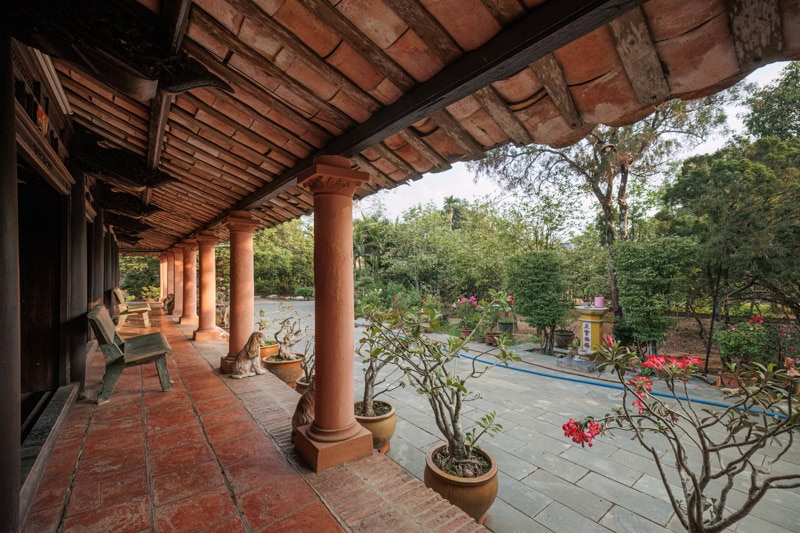
“The low veranda makes visitors bow respectfully when entering the house, reflecting the dignity of wealthy families of the past,” explained Đỗ Cao Danh, the sixth-generation heir of the house who worked as a primary school teacher and harbored a passion for culture, language, and international politics.
Đỗ’s ancestor built the house after moving to Cochinchina from what was then Canton province of Qing China. He was a bá hộ, a title given to wealthy rural individuals who owned a hundred tenant households.

Đỗ believes that the house existed before his grandfather (Đỗ Cao Thứa) was born in 1917, and estimates it to be over a hundred years old without ever undergoing major renovations. This is a testimony of its strong foundations, owing to a grand total of 36 hardwood pillars, over half a meter in diameter each, which are still in pristine condition without termite damage.
The main section of the home houses the ancestral shrine “table”, known as gian thờ in Vietnamese, and also functions as the living room for members of the Đỗ family. In the earlier days, servants and “tenant farmers” were accommodated in a rear segment behind the main section.
A painstaking construction process to create a lasting ancient home

Fabricating a house of this grandeur at the end of the 19th century is no simple task by any measure.
Transportation, materials and skill labor were limited at that time, and Đỗ’s ancestor reportedly employed a team of craftsmen from the north of Vietnam, providing food and lodging for them throughout the construction project that spanned 3 years.
Despite being relatively isolated on an islet, a notably large workforce was mobilized to fetch sand from adjacent Bình Hoà Hamlet in Thành Phước Commune, 8 kilometers away across the river with the help of oxen carts and workers who awaited at each ferry crossing. The manpower and resources required to construct such a notable home in a bygone era are awe-inspiring.
Novel lighting technique keeps the home “energy efficient”
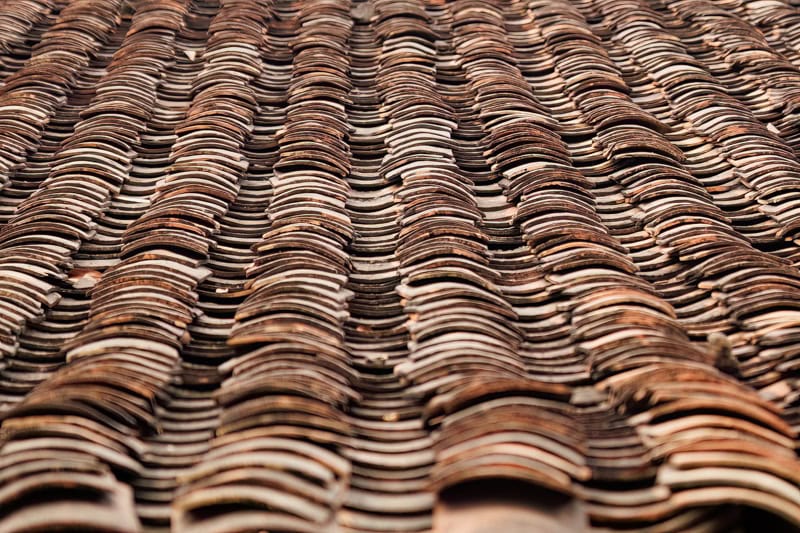
Unlike many traditional wooden houses in other regions such as Central Vietnam, which are often neither tall nor feature a high veranda, resulting in poor indoor lighting, you’ll notice that the Đỗ family home features white-toned roof tiles that brighten the interior and make the ceiling appear higher.

Đỗ explained that each tile was coated with a thin layer of white lime to achieve this effect.
Despite being a residential architect by trade, I have not had the chance to study other wooden houses in south of the country to determine if this is a widespread construction technique. Still, my speculation is that not many builders at that time were gifted with such ingenuity.
Interestingly, the tiles’ lime coating remains pristine and white despite historical upheavals in the last few centuries.
A rich collection of historical intricacies chronicles the region’s past

The then owners of the Đỗ estate relocated to Saigon during the First Indochina War for safety, and many valuable artifacts, including exotic furniture made by artisan carpenters, were stolen.
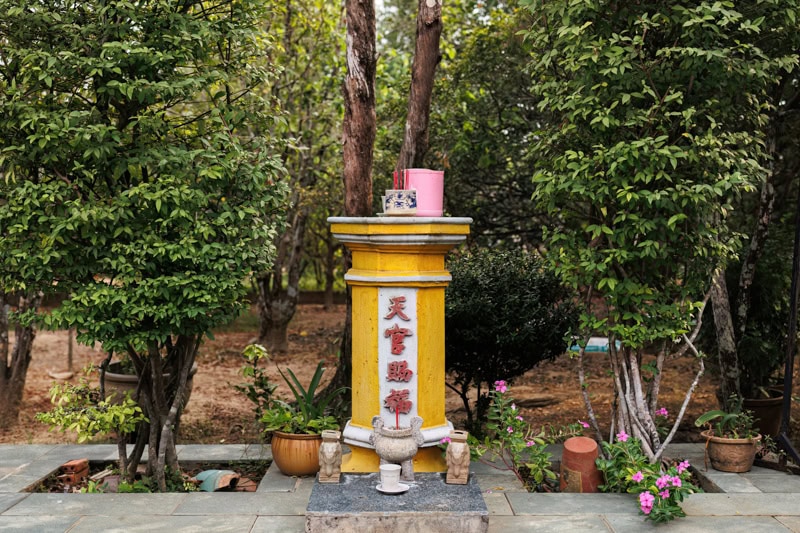
Fortunately, exceptionally intricate Chinese character engravings surrounding the central altar and the sides of the main hall can still be seen clearly. The woodwork features vivacious and meticulous depictions of dragons, Asian unicorns, turtles, phoenixes, deer, birds, grapes and even squirrels.
An ancient estate that sits within a lush, fertile slice of Bình Dương Province

Today, the Đỗ family home consists of two parts. The main house features three main “compartments” for worship and two other auxiliary areas — all built in the late 19th century.
The house has since been expanded after 1975 to accommodate the increasing need of living space for caretakers despite the declining number of employed farmers.
The expansion maintains the aesthetic lines of the original structure without any stark contrast.

Apart from construction-related details, this architectural jewel is also unique because it sits in a 7000m2 lush fruit garden, aforethought that reflects the aesthetics and practical concerns of artisans of that era. At a national level, the home was gazetted a provincial-level Artistic Architecture Monument by Bình Dương Province in 2004.
Ultimately, I believe every house, large or small, carries its own unique story.
The story of the Đỗ Cao Thứa ancient house is not just grandiose beyond proportions, but like where it resides, holds a significant place in our time and Vietnam’s past.
And as the farmlands gradually disappear, and in the face of rapid urbanization, one can’t help but to wonder how long more such pristine jewels can withstand the pressure of change.
(This article was translated from Vietnamese.)