Phở may be Vietnam’s “national dish”, but its flavors are by no means stagnant and stable across the country.
In the battle between Northern and Southern Phở, Hội An’s Phở-style is the beloved oddball that hides away from the crossfire.
So what exactly is special about Phở Hội An?
To understand it better, Saucefish visited Quán Phở Lucky (42 Nguyễn Đình Chiểu, Sơn Phong, Hội An, Quảng Nam), a humble Hội An-style phở joint situated beside a Cao Đài temple.

The vicinity, once a kumquat growing area before urbanisation in the 1980s, is known as chợ con cọp (tiger market). Perhaps symbolically, a beautiful specimen of a kumquat tree sits as a “boundary” between kitchen and street
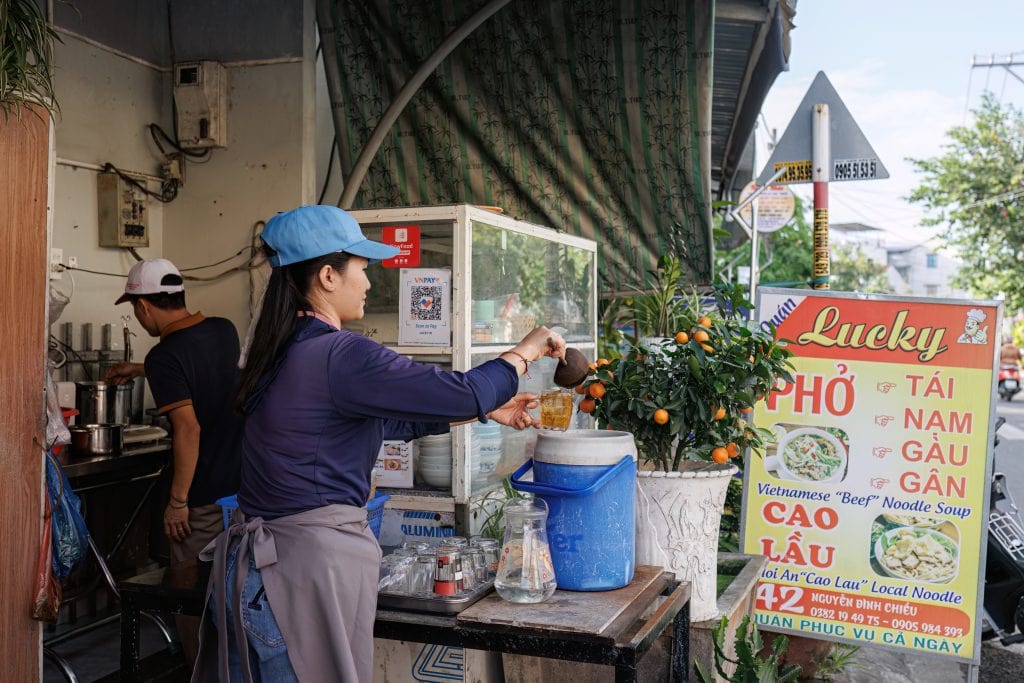
Couple-owner-duo Trí and Vy began cooking professionally in a hospitality kitchen at a large beachside resort, but today the husband-and-wife team are churning out bowls of the unique dish back in the heart of Hội An’s old town.
“Unlike Northern Phở, Hội An’s Phở noodles are dried in một nắng-style for a day before cooking,” Trí explained.
Một nắng refers to a unique Central Vietnamese drying technique that involves sun-drying seafood or fresh produce under direct sunlight for a shorter duration than full-drying. The result is an al-dente texture vastly different from softer Northern-style rice noodles.

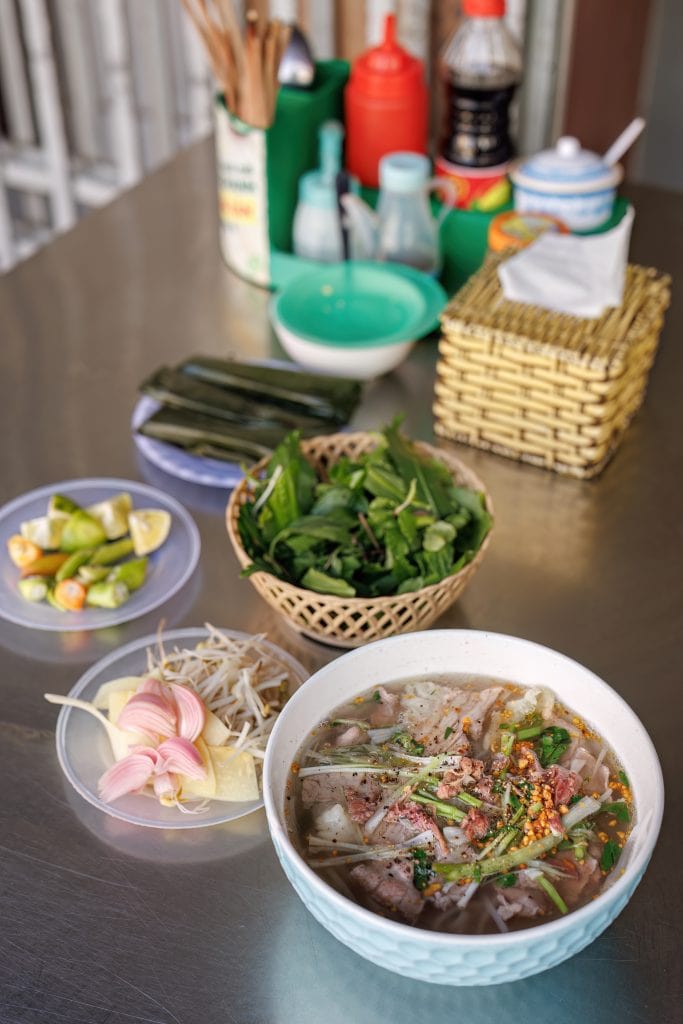
Yet what truly intrigues Vietnamese locals from other provinces and cities is the inclusion of crushed peanuts. We’ve seen peanuts in some forms of Saigonese-style Hủ tiếu, but peanuts in phở? Very unique.
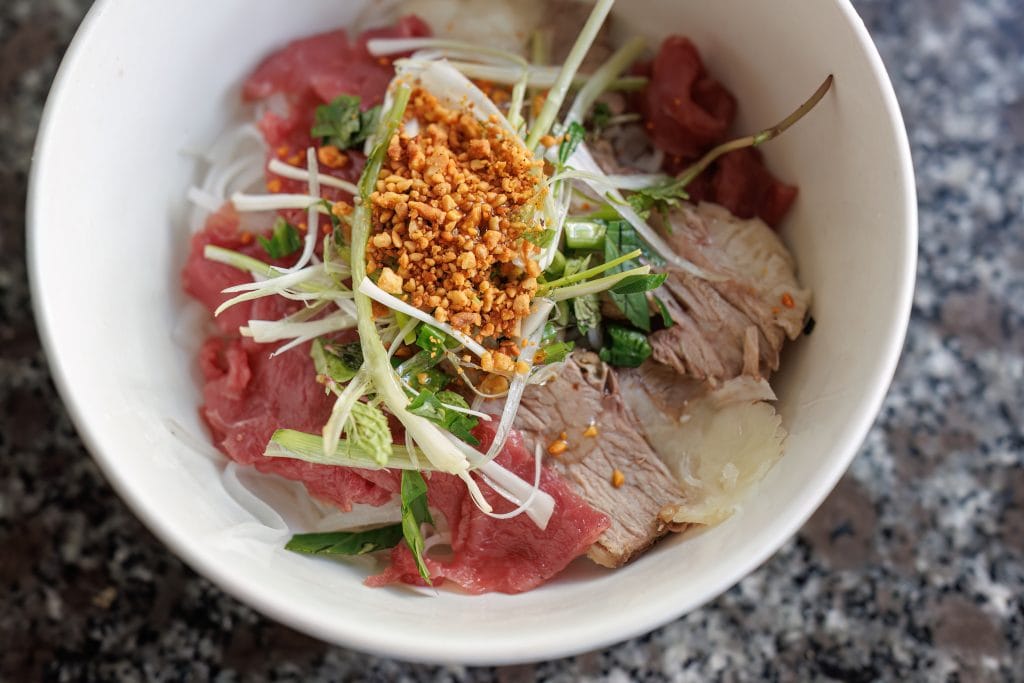

Before hot broth is applied over an assembled bowl of Phở Lucky’s Hội An-style phở bò, a generous dash of chive oil, very specifically chive bulb oil (made with chive bulb and not with typically-consumed chive leaves), is tossed over the crushed peanuts.
The interaction of these elements result in an aroma that is difficult to describe — earthy, herbal, with a shallot/onion-like sweet-smelling aroma.
Don’t miss Hội An-style Phở when visiting the ancient town
It may be different from typical phở that you’re used too, but few variations of a well-acclaimed national and/or cultural dish stand out in such a memorable manner.

Ultimately, the dish is still Phở in several ways.
From beef bone broth cooked with root vegetables (common in the South) to herbs served on the side just like in the South, we’re not complaining that it’s also odd but customary to consume Hội An-style Phở with sliced raw papaya.
“I think our broth has been influenced by Northern-style Phở so we’ve got a good balance,” Trí exclaimed.