Ho Chi Minh City’s coffee market is no longer new to the lure and lore of specialty.
From the days of Saigon’s favorite specialty joints such as Bosgaurus and The Workshop to a theoretical singularity that emerged from the merger of the local love of garden coffee spaces, trendy brewing techniques, and “glasshouse roasting” at places such as Every Half Võ Thị Sáu (read more about this in my 2022 quirky Koi Fish Café article that you’ll find over at Atlas Obscura), Saigon’s coffee roasting and coffee consumption culture has evolved with the times.
Even beyond the south of the country, a stroll through the capital gives hints of how Hanoi may just be slated to become the “Melbourne of Southeast Asia” — there’s no lack of established chains such as Thái Yên or Indie cafés such as Third Wave Roastery. But that’s however a topic of contention for another lengthy caffeinated discussion. This article stays south for a glimpse of how I think Ho Chi Minh City’s lifestyle coffee scene has seen a recent zillennial-driven change in direction and taste.
Zillennials? That's just something between Millennial and Gen Z.
Real estate is drastically reshaping Saigon’s specialty coffee industry

Owing to a real estate market boom, oversized “communal all-day cafés” popular in the early 2010s have seen a reduction in numbers, especially in the city’s center. With café operators severely strapped for real estate choices, those doggedly committed to the art have been forced to reinvent themselves.
Nguyễn Hải Ninh, the former CEO of The Coffee House, once remarked in 2018 that in Vietnam, a verbal invitation for a weekend coffee session is “not an invitation to go to a place to drink a black liquid, but an invitation to go to a private, comfortable place to relax and chat”. I agree for the most part — the city’s lifestyle demands the continued existence of comfortable non-alcoholic beverage “spaces” for locals to meet and work in peace.
But with so much at stake, have café operators not considered that perhaps, just perhaps, that a decade of Starbucks and a hailstorm of what came after, has conditioned young locals to become familiar with non-traditional coffee and become “spiritual baristas” who yearn for high-quality coffee beans?
If the existence of this demographic can be proved, it is also a market that can be tapped.
This article explores this possibility with the help of some serious café hopping in downtown Saigon.
Abandoning the motto of “taste doesn’t matter” at Rollin’ Bean (Hạt Cà Lăn)
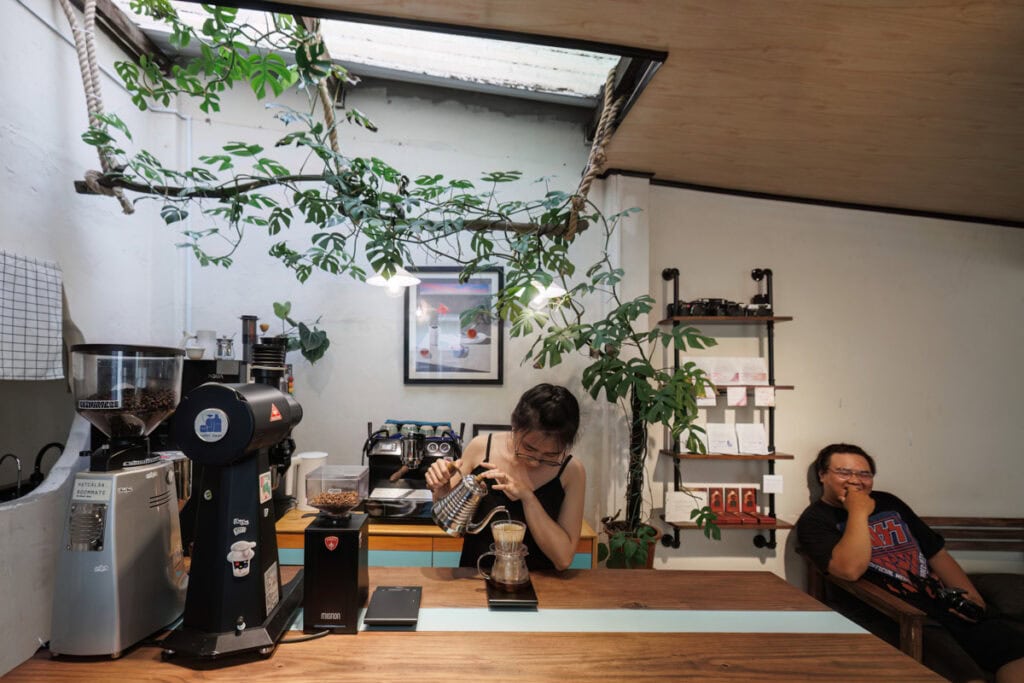
Hidden within a tiny alley beside Trần Hưng Đạo Street’s recognizable Nguyễn Kim electronics store, Hạt Cà Lăn café began its life in 2018 as a micro-roastery called Rollin’ Bean.
Founder Nguyễn Hoàng Long saw a gap in the market at that time. Not many coffee roasteries were focused on imported coffee beans and his experience working with a Taiwanese coffee trader led him to start his very own business.
“I started a micro-roastery to introduce coffee origins from other countries to local coffee lovers,” Long explained.
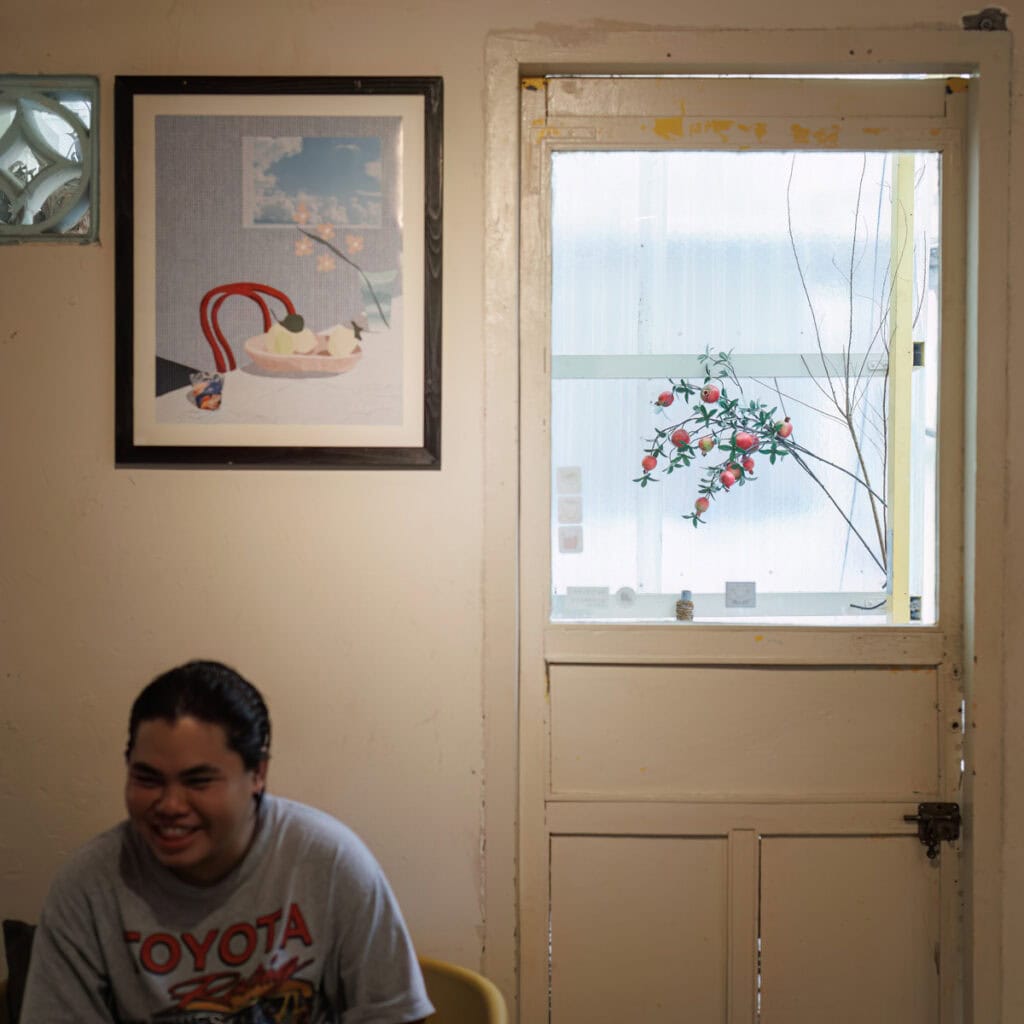
“It was 50–50 between selling and sharing [knowledge], [but] then I took an extended break to work on a coffee farm,” he elaborated, with Rollin’ Bean’s operations resuming with greater intensity in mid-2022. That was when the brand’s identity began to take shape, with Long and his team carving a distinctive style in Vietnam’s specialty coffee scene.
Initially, Rollin’ Bean’s activities consisted mainly of roasting for business-to-business, with most action happening in Tân Phú district, relatively detached from the deep city center. But last year, a chance location scouting led to the establishment of Hạt Cà Lăn Café, a name derived from a direct Vietnamese-to-English translation of the roastery’s name. From about three months prior to the publication of this article, Long’s coffee roasting work became consolidated into Hạt Cà Lăn’s space, making Hạt Cà Lăn the business’ homey headquarters as well as a physical store.
“We finally found a workspace for [Rollin’ Bean’s] team members and a touchpoint for customers to enjoy coffee in District 1,” Long emphasized.
“This is our little coffee hood!”
Rollin’ Bean talks to Gen Z about specialty coffee through visuals
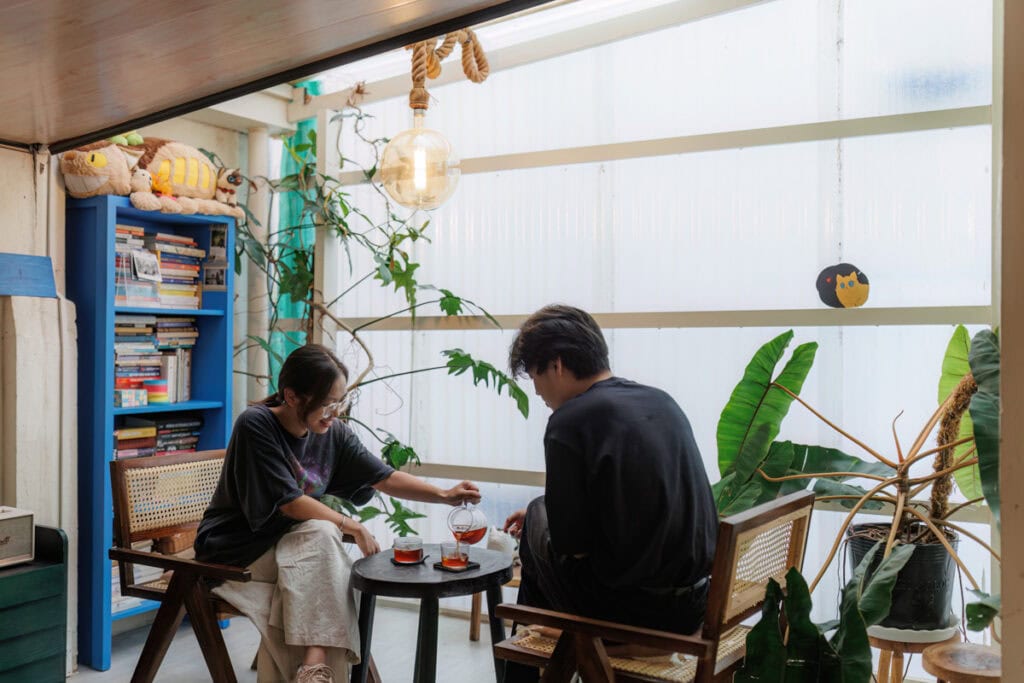
With its pastel toned interior speckled with adequate greenery and comfortable reflected lighting even during the harshest of summer days, Hạt Cà Lăn has also become a preferred spot for regulars, predominantly Gen Z, to chill out whenever stress hits.
With the help of medium format photographer and visual artist Phạm Hữu Đức, the humble yet very much sophisticated coffee space combines cup quality with the vibe preferences of a fast-growing young, discerning coffee drinker crowd who no longer only see cafés as a place just for socializing.
Long’s partner, Nguyễn Ngọc Tuyết Anh, pulled a sweet Guatemalan double shot as we spoke.
Just like other concepts featured in this story that celebrate both local and foreign coffee beans, Rollin’ Bean is actively introducing Vietnam’s rapidly-improving coffee quality to local consumers.
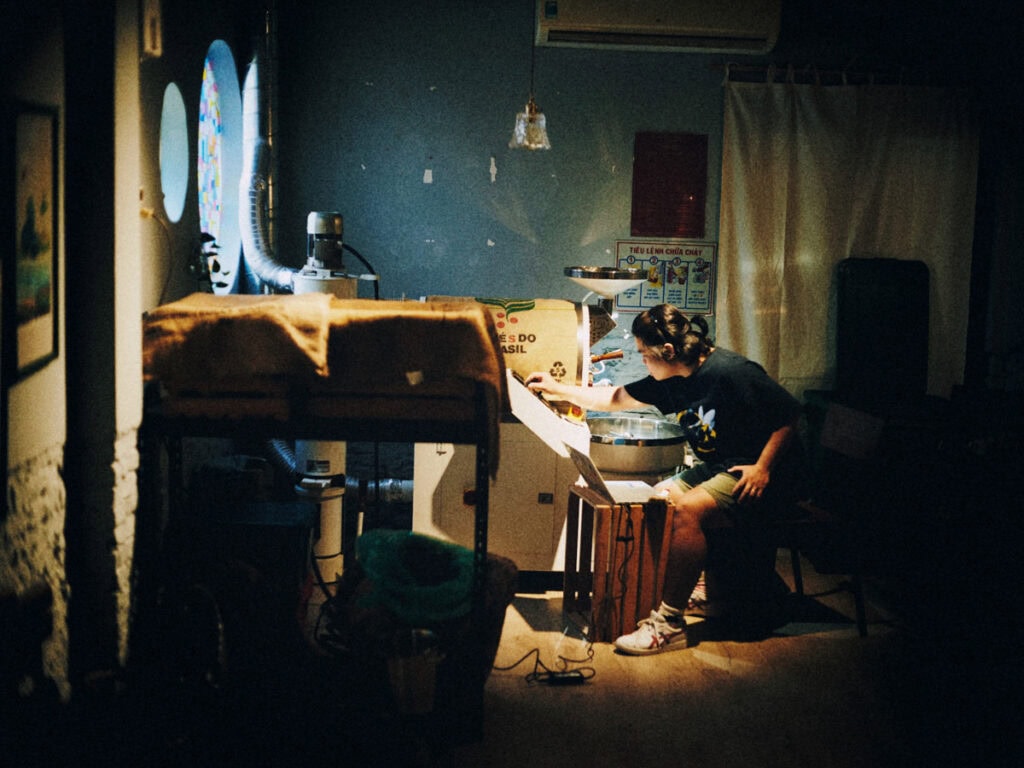
You’ll find limited runs of beans such as natural-processed catimor grown at 1500 meters-above-sea-level from K’long K’lanh where Long worked with ethnic K’ho farmers, a small commune-level town 50 kilometers from Đà Lạt that boasts a silky body and sweet aftertaste, reminiscent of “brown sugar and ginger jam”. Long notes that the area uses mushroom cultivation waste from nearby mushroom farms as a fertilizer for coffee trees.
Patio Café’s therapeutic coffee social space made possible through the architectural revival

For lovers of minimalist spaces, Patio Café in Hẻm (Alley) 400 Lê Văn Sỹ Street is a rare find, especially in the far reaches of District 3.
Cao Ngô Thế Tú Anh, a residential interior designer by trade, was convinced by a friend to take charge of revitalizing an almost 60-year-old biệt thự song lập (duplex villa), once owned by a flower trader, into a unique coffee space.
Spurred by his love of specialty coffee, he agreed.
“I saw the place and instantaneously felt its soul,” Tú Anh said, explaining how capturing the essence of existing architectural spaces is vital to creating a concept that’s enduring and relatable.

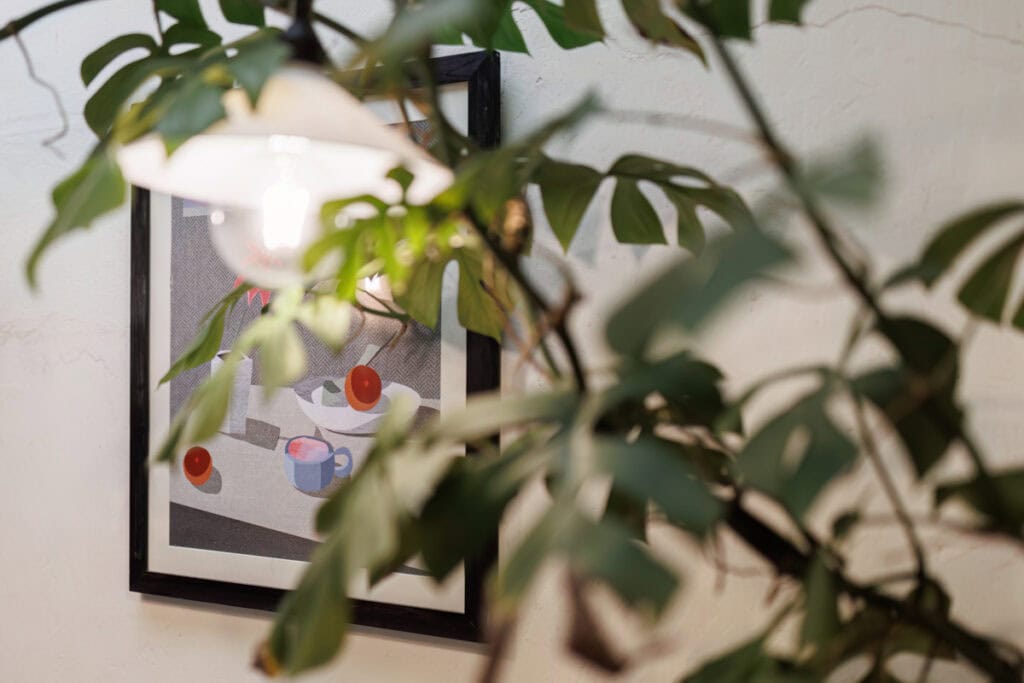
At Patio Café, Tú Anh employed architectural juxtaposition with the help of unique sculptures and structures that aim to evoke third-person memories of the building’s past and present.
In his interpretation, a patio is not only the paved outdoors of a residential structure — but it also happens to be the parallel soul of an abode that seamlessly leads minds towards nature that awaits outside, inevitably calming anxious thoughts through sequential moments of peace.
Extrapolating on that philosophy, the building’s louver windows and tiles were preserved if still structurally sound. That, along with the help of countless vantage points at Patio Café, unconsciously guides one’s attention towards its patio.
“Just like naming your pet!” Tú Anh added, explaining how the café was thus named simplistically for its most lovable trait.

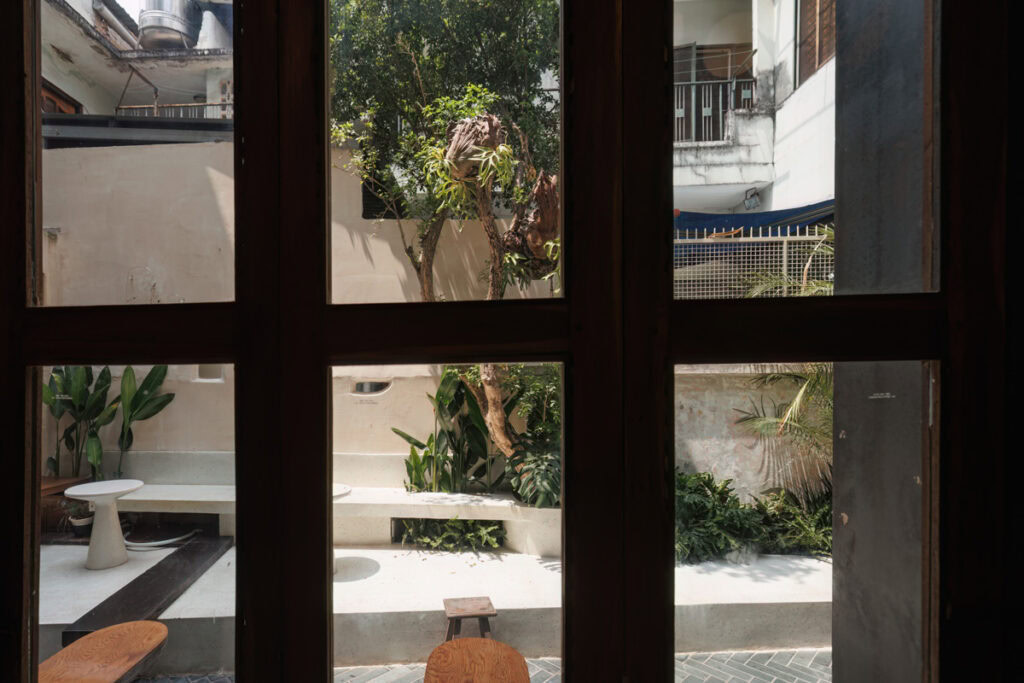
The other side of Patio Café’s duplex villa is still inhabited by local residents.
Agreeable interior design, lighting and drinkability is key at Patio Café
Indeed, it’s challenging to find an angle in the compound where you can’t see a flood of natural light illuminating the outdoor patio seating area — shadows that may form in different shapes dramatically change the atmosphere, especially before and after high noon.
Additionally, despite a conversation that focused on interior design and the peculiar artwork that fills many corners of Patio Café, Tú Anh insists that there is one factor above all that cannot be ignored.
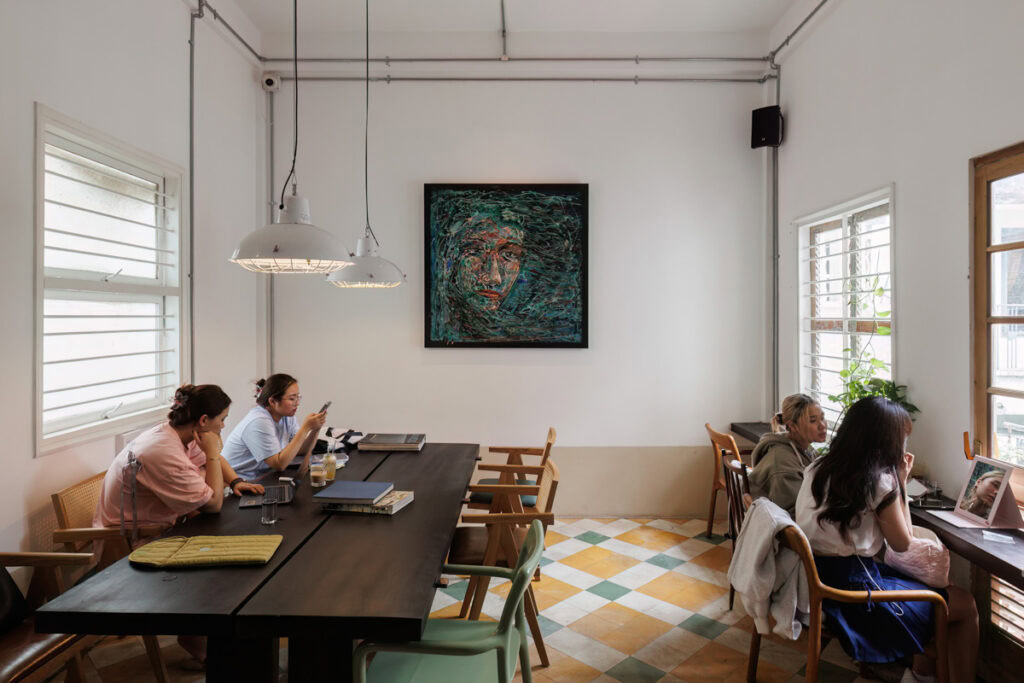
“If you call this a coffee workspace or living space, then what’s most important is the quality of coffee,” Tú Anh remarked.
Granted, Patio Café is not a coffee roastery and acquires coffee beans from a number of trusted specialty roasters, but you’ll still find the basics such as a single group La Marzocco machine and a selection of pour-over beans for coffee lovers who aren’t into espresso.
Finally, Tú Anh suggests that customers are more demanding these days.
“It’s not just flavor or design, but both.”
Consumers rediscovering their love for specialty coffee roasting at Every Half Ngô Văn Năm
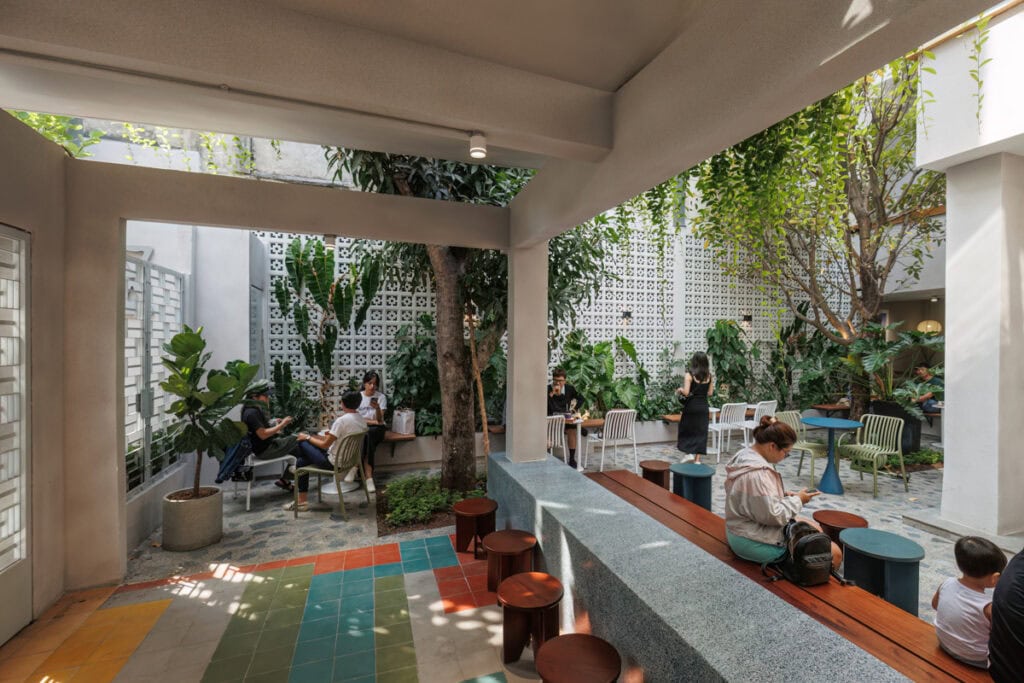
Once the modernist home of an ARVN officer before the country’s unification, this coffee destination near Saigon’s Japantown is Every Half’s Coffee Roasters’ newest venue on Ngô Văn Năm Street.
If you’ve been following Saigon’s specialty coffee scene for some time, Every Half will not be new to you. The trendy specialty coffee chain now offers at least 5 different light-roast coffee origins for espresso and has also delved into other varietals such as Liberica.
However, this friendly exposé goes beyond typical coffee nerdiness like that.

A lộc vừng (Barringtonia acutangula) tree, painstakingly installed onto the compound during wee hours with the help of a crane, provides guests who dislike air-conditioning much-needed shade in a city that is being scorched by the longest heatwave in three decades.
“We didn’t know it was an old house, [because] a Japanese karaoke covered everything,” Trần Lê Minh Trúc, Chief Operations Officer of Every Half Coffee Roasters added. The area, previously home to many sleazy Japanese bars, is seeing a Food & Beverage revival.
Unlike most of Every Half’s previous stores that were designed together with a new M Village, Every Half Ngô Văn Năm is an independent venture.

Custom small-batch roasting at Every Half Ngô Văn Năm aims to boost coffee curiosity
Here, a novel and interactive coffee activity has been introduced — guests are able to roast their own coffee with tech-friendly devices controlled by apps. For VND300,000, you’ll be able to roast two 70–100g batches of green coffee on the Nucleus Link, the official sample roaster of the World Coffee Roasting Championship.
Serious home baristas and coffee professionals can choose to roast on a Stronghold S7 Pro with a maximum batch size of 850g.
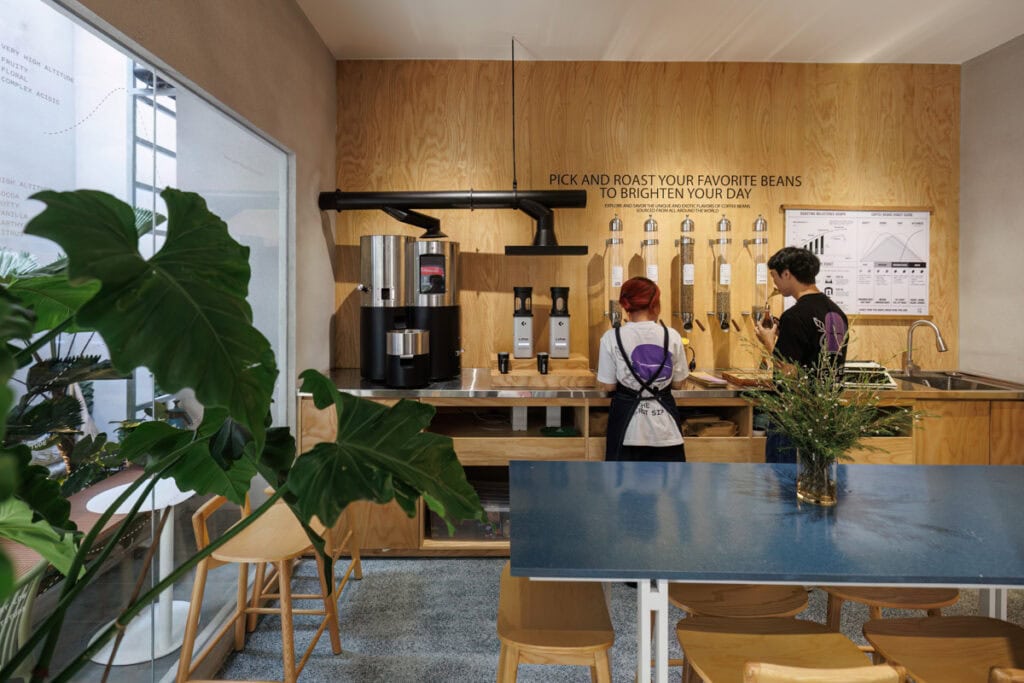
“We show first-timers how to set a standard profile, and they get to make adjustments on the second try,” Trúc explained, detailing the rationale of why customers get to roast twice per session.
The coffee-enthusiast-turned-professional who began his career as a barista with now-defunct Urban Station also notes that although many participants are young locals, expatriate foreigners who live in the city seem to be more interested in hands-on roasting.
“Maybe we can add more choices of Vietnamese beans to become a touchpoint for foreigners to discover Vietnamese coffee,” Trúc added.

Beyond all, when asked if Vietnam’s tightened DUI laws would boost sales of night-time café businesses from the Gen Z crowd, Trúc suggests otherwise.
“I don’t think the laws will change coffee and alcohol habits. It’s a different drink,” Trúc said.
“They’ll just take Grab!”
Regardless, Every Half aims to strike hard at the game of coffee balance. He believes that Gen Z coffee drinkers are open-minded about specialty coffee and are willing to display their affection, especially on social media, for it.
“They understand that the price of good coffee is at least the same as a cup of boba milk tea!” Trúc adds.

Going technical at Hoff Specialty Coffee to acclimatize HCMC’s coffee lovers with the art of scientific brewing
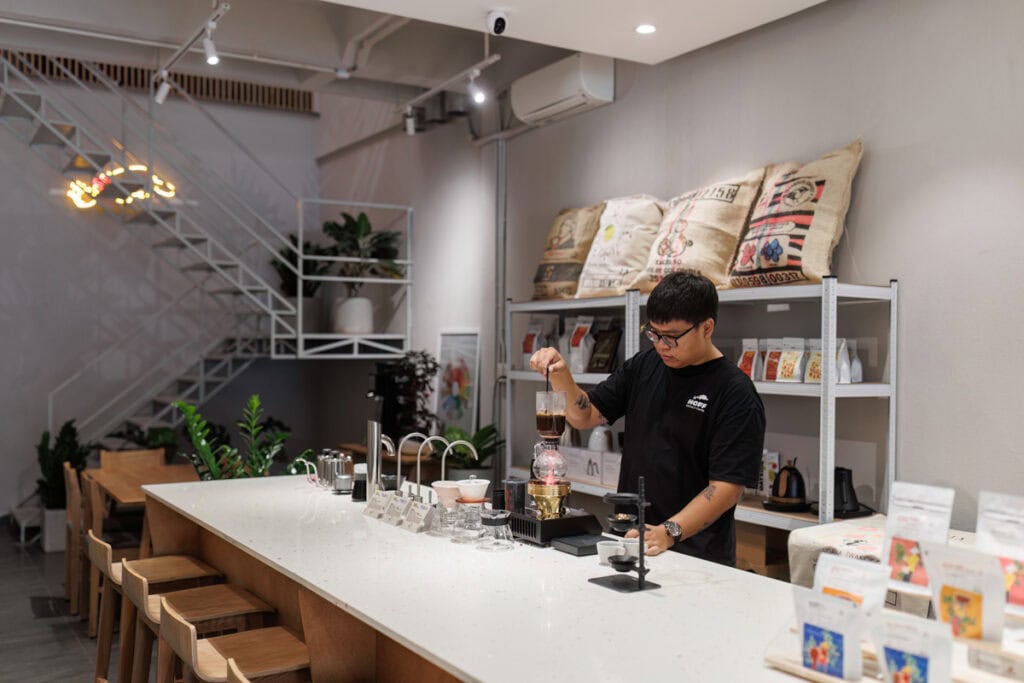
Then there is a different type of young, trendy specialty cafe. One that goes into deeper technical details.
At Hoff Specialty Coffee on Võ Thị Sáu Street, founder Nguyễn Mạnh Khiêm began casual commentary while making a siphon coffee — he didn’t start with origin jargon, but instead talked about the importance of water quality.
“98% of a cup of pour-over coffee is water. You can’t make a good cup of coffee without good water,” Khiêm explains.
Khiêm opted for water filtering using Brita’s Purity C 1000 AC with a TDS (Total dissolved solids) of approximately 50 mg/L and a PH of 7.5. It’s borderline too much information to digest if you’re not a professional barista, but Khiêm is committed to the setup of multiple types of water filters for different types of beans and extraction methods because he believes that “the difference is real”.
“For espresso, we use Brita’s Purity C Finest which has less mineral content,” Khiêm elaborates.
“It also protects espresso machines from scaling damage.”
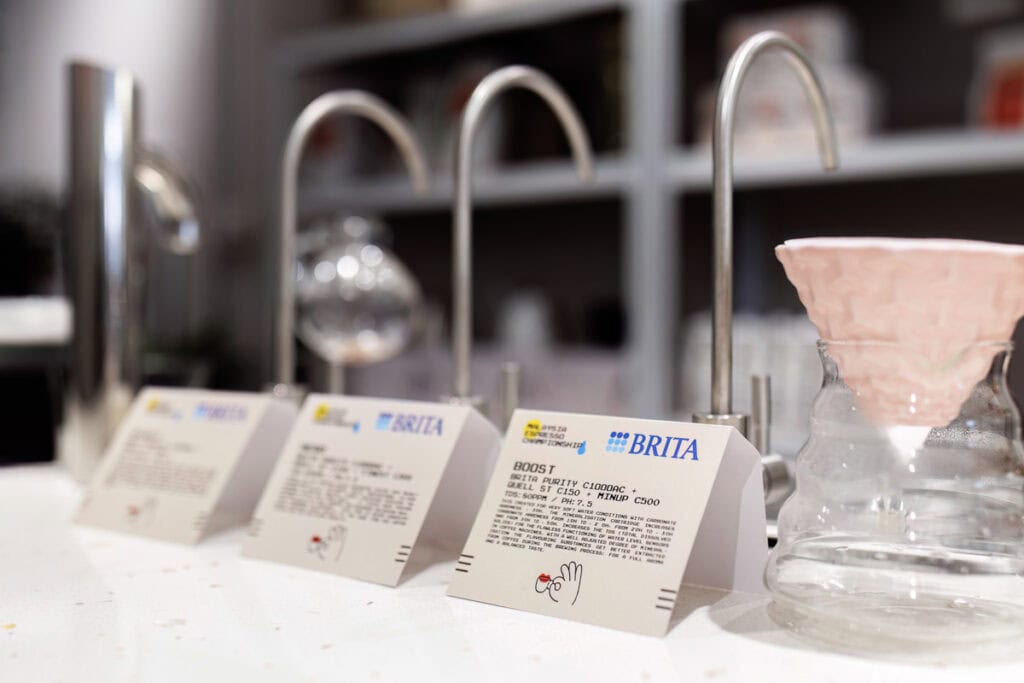
The science itself isn’t all that complicated. An abundance of calcium ions in harder water makes penetrating cellulose in coffee grinds easier, extracting more coffee flavors that are perceived to be tasty. High carbonate content influences coffee extraction in other ways, such as neutralizing acidity and improving mouthfeel, but may also lend a hand in highlighting coffee roasting notes best described as “ash-y” or “carbon-like”.
Hoff Specialty Coffee might be (too) scientific but it’s not uncool
We definitely got a little too technical, but Hoff Specialty Coffee, which started its journey as Bean Hop Coffee Roastery, also knows how to lighten up and garner the attention of casual young coffee lovers.
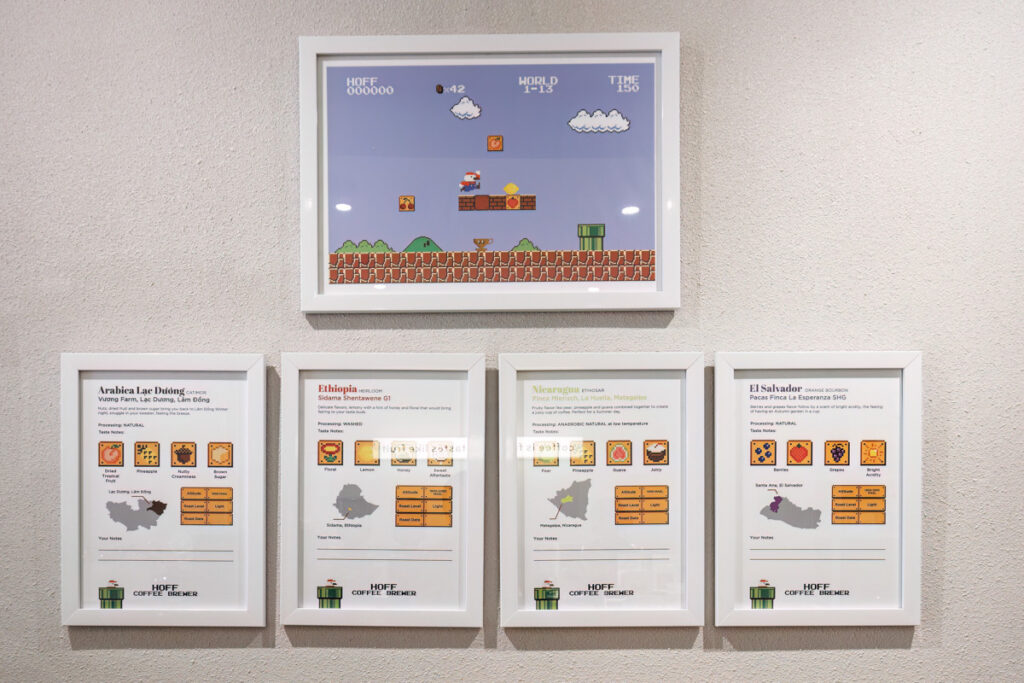
Hoff Specialty Coffee is the roastery’s second successful attempt at a physical café business, and Khiêm and his team plan to focus on direct-to-customer sales while popularizing lesser-known Vietnamese coffee origins beyond Vietnam’s borders.
Beyond the dazzling arsenal of a Slayer two-group and six grinders including a Mahlkönig EK Omnia that’s been the talk of coffee town recently, it’s not hard to ignore coffee gear and become rather enamored by Hoff Specialty Coffee’s sleek and simple interior.
“It’s a cozy living room, just like our first spot,” Khiêm explained, drawing parallels from Hoff Coffee Brewers, Bean Hop’s first venue in District 1.
Sure, the walls are white, and it has wood. But if it’s a comfortable place to relax, chat, and drink a high-quality cup of black liquid, I think we’re on the right track.