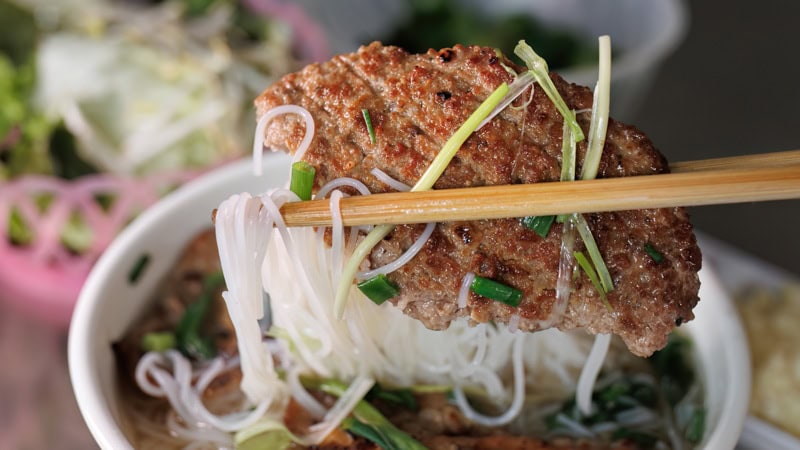
If you scour the net and social media for Vietnamese food-related stories, you might find it difficult to ignore a shared observation. Bún bò Huế has steadily gained traction over the past decade as the new champion of Vietnamese cuisine. And justifiably so.
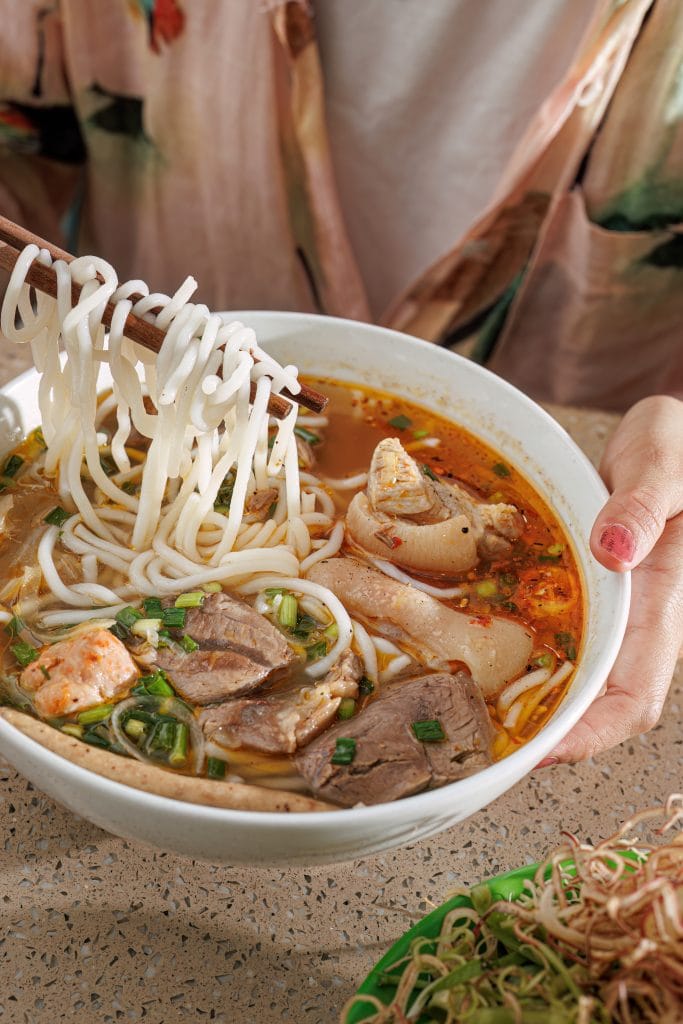
Made with beef, lemongrass and umami-heavy mắm ruốc, a clay-hued fermented krill paste that’s not nearly an olfactory bomb like its cousin mắm tôm, well-prepared Bún bò Huế broth is guaranteed to be earthy and aromatic, holding up to any quantity of added spiciness.
Yet, Bún Bò Huế is also a battlefield of culinary opinions.
It may technically be from Huế, with its locals declaring supremacy, but every region in the country adores it and makes it quite differently.

In fact, the proprietors of Bún bò Huế Đông Ba (207B Nguyễn Văn Thủ, Đa Kao Ward, District 1, Hồ Chí Minh City), a popular 30-year-old establishment in Ho Chi Minh City, tells us that even neighboring villages in Huế make it differently.
It’s a phenomenon akin to provincial pizza styles, or prefectural ramen varieties.
Semi-standardized preferences, but no hard and fast rules.
First-love type of destination for Saigon’s Bún bò Huế lovers
This is a story about a commendable Bún bò Huế joint in a metropolis which consumes a tremendous amount of it.
The story’s matriarch, Madam Tâm Ngộ, an immigrant from Huế, started purveying the dish on the street opposite Chi Lăng Park. Today the park has shrunk somewhat, with its rear-end now Vincom Center Đồng Khởi, one of Ho Chi Minh City’s most recognisable shopping mall-cum-office towers.
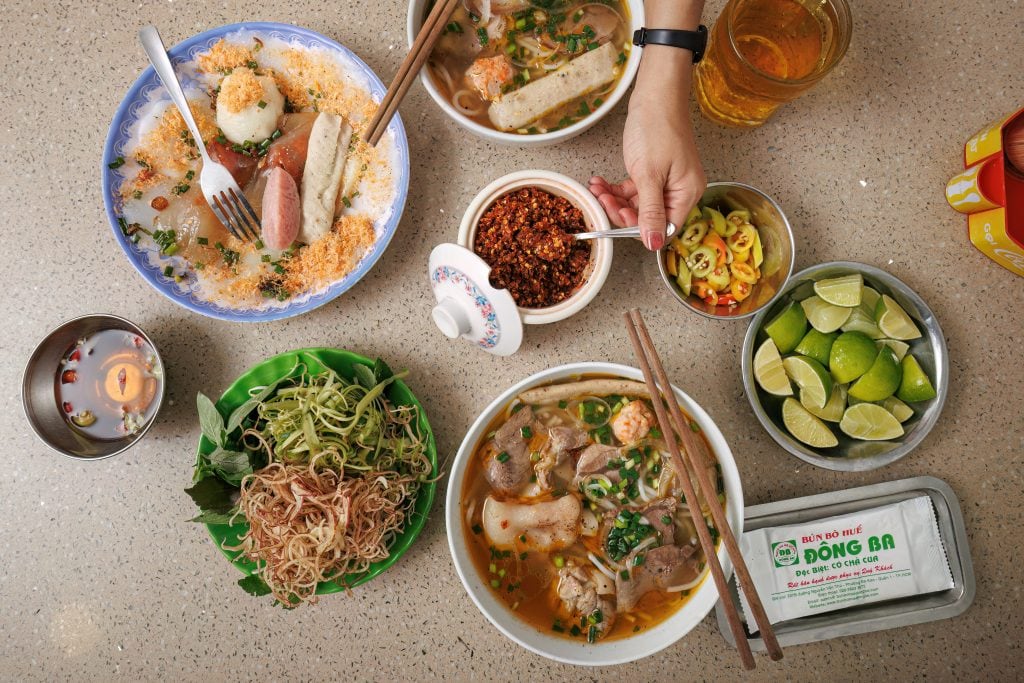
In 1995, with sufficient capital to expand the business and help from her daughter Ms Hương Xưa, the family opened a full-fledged shop at 105 Nguyễn Du Street near Bến Thành Market, and Bún bò Huế Đông Ba was born.
Today, beyond flavorful jumbo-sized bowls of Bún bò Huế served alongside banana blossom and julienned rau muống (morning glory), the humble family restaurant also serves up platters of bánh Huế, Huế-style rice cakes with an assortment of fillings and a toss of shrimp floss, customarily enjoyed with a drizzle or dip of 35°N fish sauce flavored with palm sugar, lime juice and garlic.

Heritage Huế flavors carved a niche in Saigon’s food scene
In times forgotten, high-quality mắm ruốc, made near the shores of Thuận An beach in Huế, would be transported by sampans towards the city’s citadel via Phổ Lợi, a distributary river of great commercial importance. Merchants gathered at Phú Hậu village where the Perfume river split to trade.
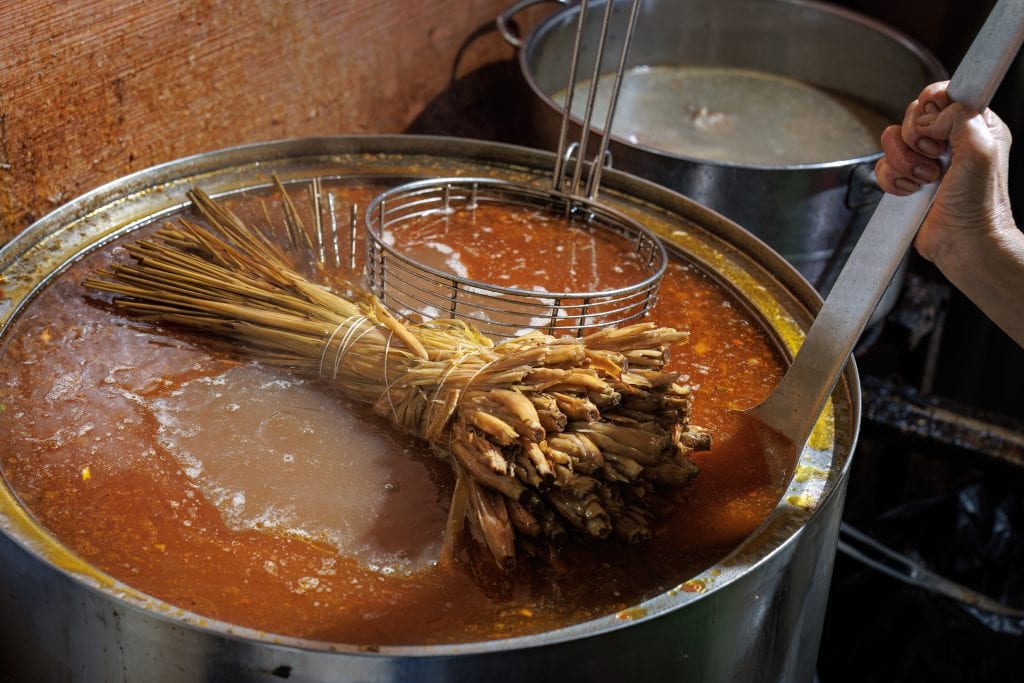
A steadfast commitment to this condiment, generous amounts of lemongrass, and simmering beef bones for more than 12 hours a day helped Đông Ba amass a fanbase quickly.
The resultant broth is rich and memorable. A trinity of complementary aroma from beef, seafood and herbaceous elements interacting to form culinary congruence.
“Very little of our original recipe has changed,” Tú Nguyễn informed.
Apart from tweaking spiciness and balance slightly for Saigonese preferences, the third generation owner of Bún bò Huế Đông Ba insists that the soul of his grandmother’s Bún bò Huế persists 30 years on.
Chả cua, a traditional Huế-style crab-and-pork cake essential to Bún bò Huế
Another key attraction of Bún bò Huế is unanimously agreed to be a luscious mix of toppings.
Yet beyond tender pork trotters, beef brisket and cuts of Vietnamese ham, Chả cua arguably commands the greatest respect.
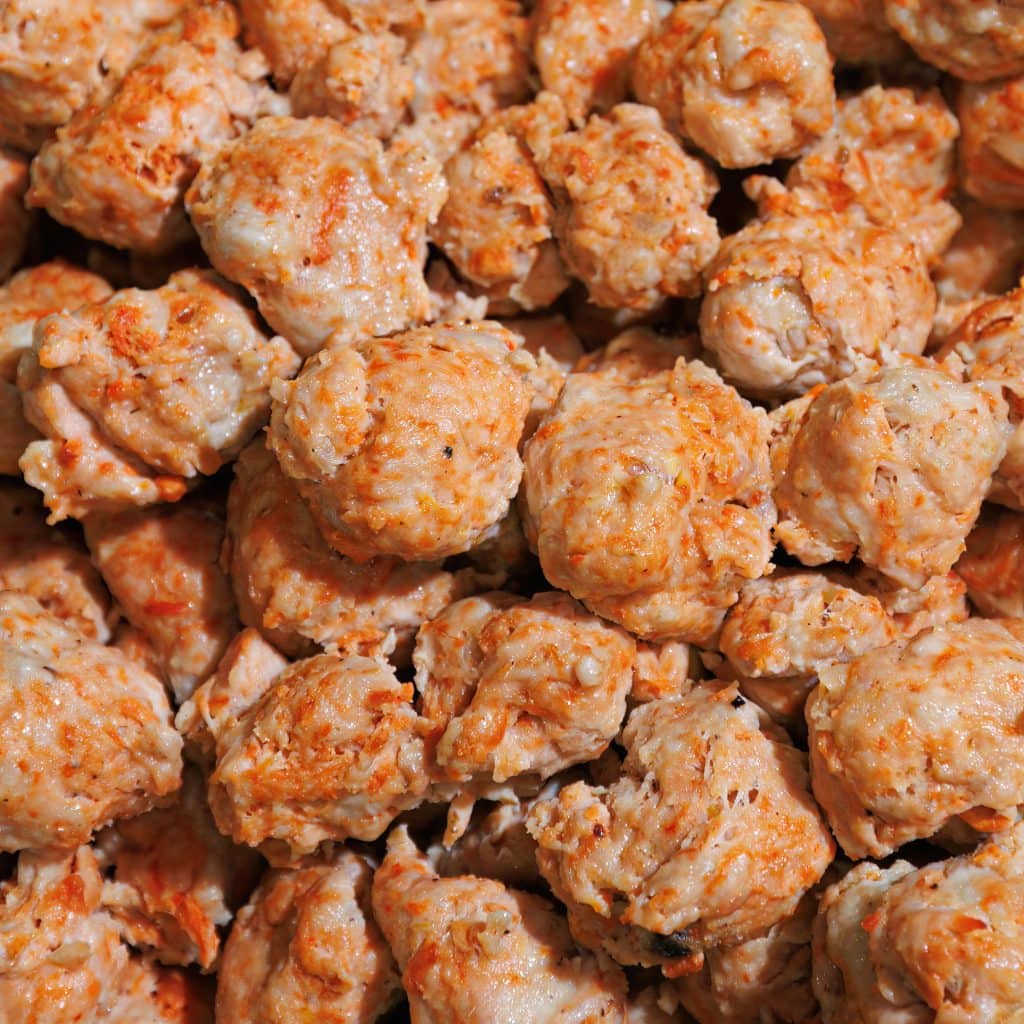
“Made using tomalley (crab innards), crab meat, lean pork, and spices, we make sure never to freeze the crab cakes,” Tú added, explaining how defrosting destroys the mouthfeel of fresh crab cakes destined for Bún bò Huế.
There are no starch fillers to lower costs, and batches of crab cake are steamed over charcoal fire before resting at room temperature for a pleasant, bouncy bite.
“Some of our old-timers opt to buy [just the] crab cakes to go for instant noodles,” he laughed.

Post-pandemic move a new chapter for Bún bò Huế Đông Ba
By the early 2000s, Bún bò Huế Đông Ba moved into a 500m² compound at 110 Nguyễn Du, firmly establishing itself as the largest Bún bò Huế operation in District 1.
This phase of Đông Ba’s existence saw rising stars from the Ho Chi Minh City Conservatory of Music and foreign guests enjoying warm bowls of rice noodles side-by-side.
Yet 2020’s pandemic woes motivated a decision to size down.
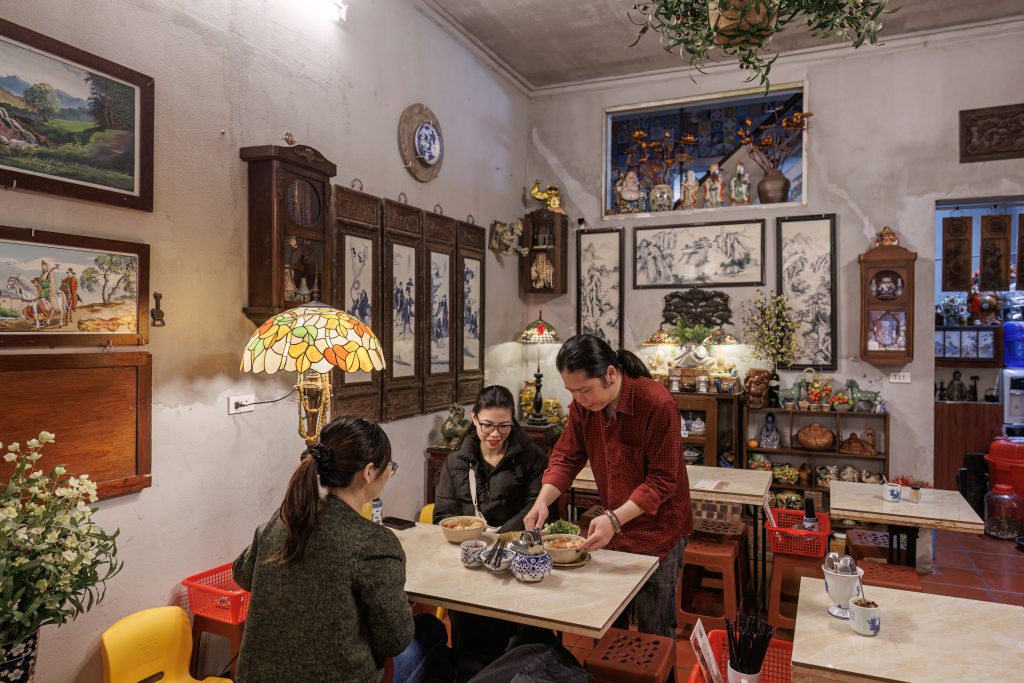
Now, you’ll enjoy Tú’s grandmother’s culinary heritage at 207 Nguyễn Văn Thủ in District 1, a quaint townhouse in a peaceful part of the city centre hidden away from Saigon’s hustle and bustle.

“A great bowl of Bún bò [Huế] is rich yet not overpowering. Fragrant yet not overwhelming, something that satisfies the people from Huế and beyond,” Tú elaborated, rather poetically.
Ultimately, today’s Bún bò Huế Đông Ba is a synergistic amalgamation of the matriarch’s original touch and third generation team — there may be known ingredients, but no actual measurements exist for a written recipe.
“[Our] customers say they can see a soul in our broth, [and it’s] something unforgettable. For me it’s the human touch and sensibility that transcend physical measurements,” Tú concluded.