Beyond phở, bún riêu deserves the status of second most popular rice noodle soup dish in Hanoi. Possibly top spot for some.
It’s filling, pleasantly tart from tomatoes, and one can have it with an assortment of toppings — everything from fried tofu, beef, Vietnamese ham. The last decade has even seen debatable additions of tóp mỡ (pork greaves) and hột vịt lộn (balut) at some joints.
Almost all popular bún riêu places are sidewalk joints or a sidewalk extension of a family home.
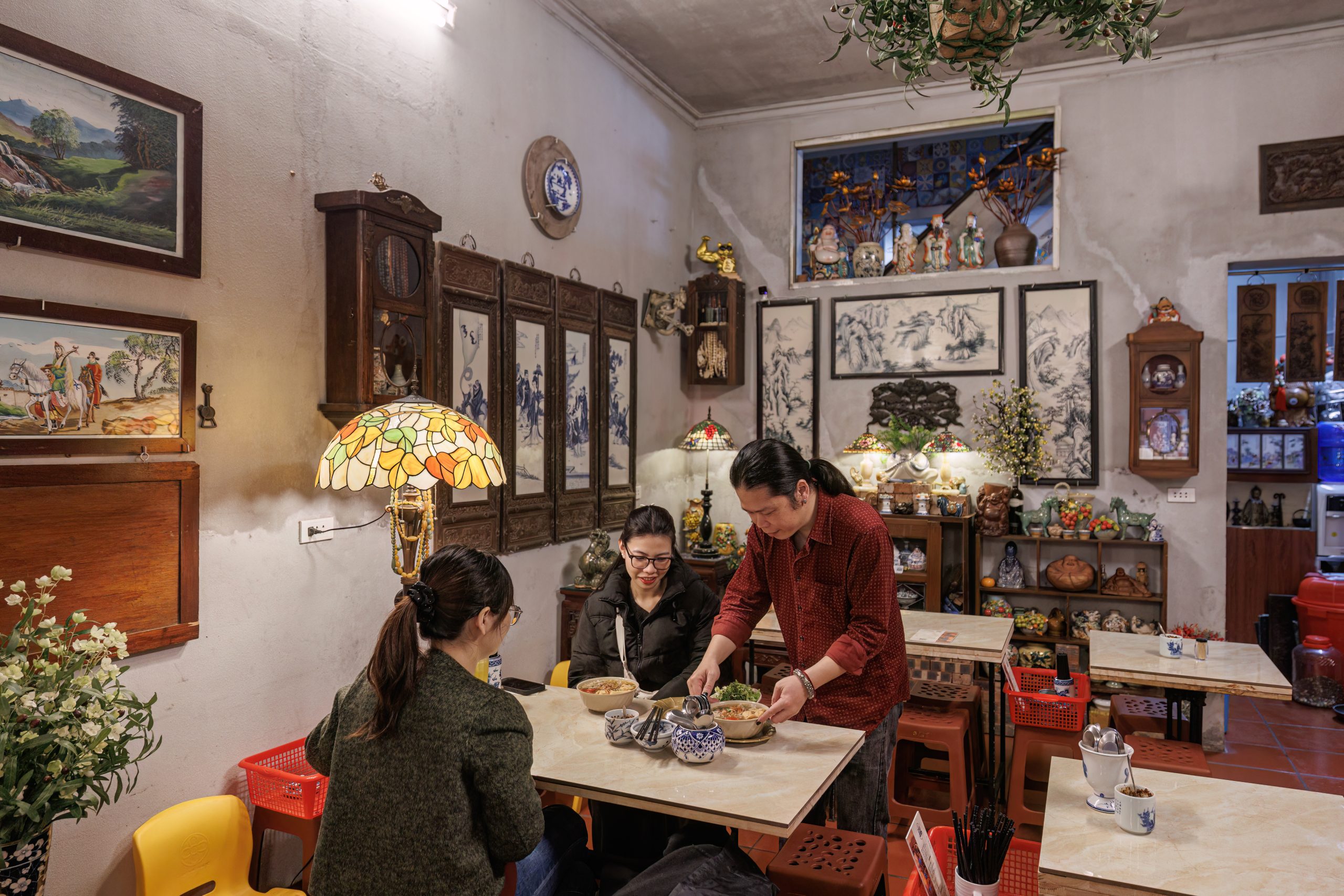
Yet today’s discovery, Bún Ziu Gánh (Lương Sử C/104, Quốc Tử Giám, Văn Chương, Đống Đa, Hà Nội), is a drastic change from the stereotypical no frills noodle environs.
Breaking Bún riêu dining conventions at Bún Ziu Gánh
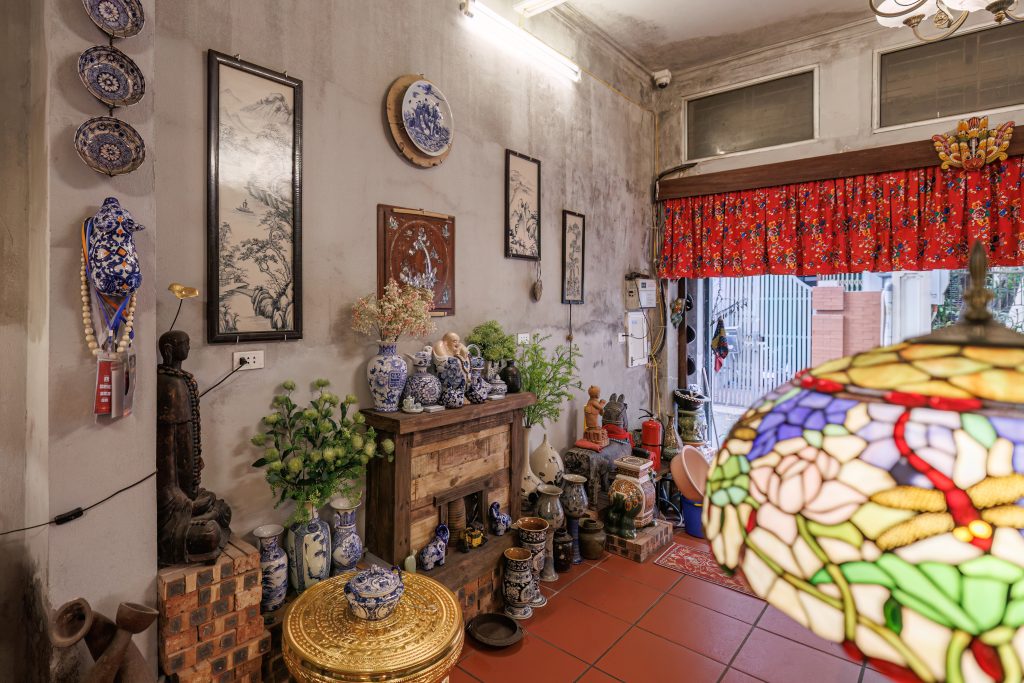
From everything like Phúc Lộc Thọ, the 3 Chinese celestial bodies embodying the traits of fortune, prosperity and longevity, to intricate wood-framed illustrations of galloping horses and even a live turtle pond, Bún Ziu Gánh is not just a family-run bún riêu joint, but the embodiment of the family’s taste in ornamentation.
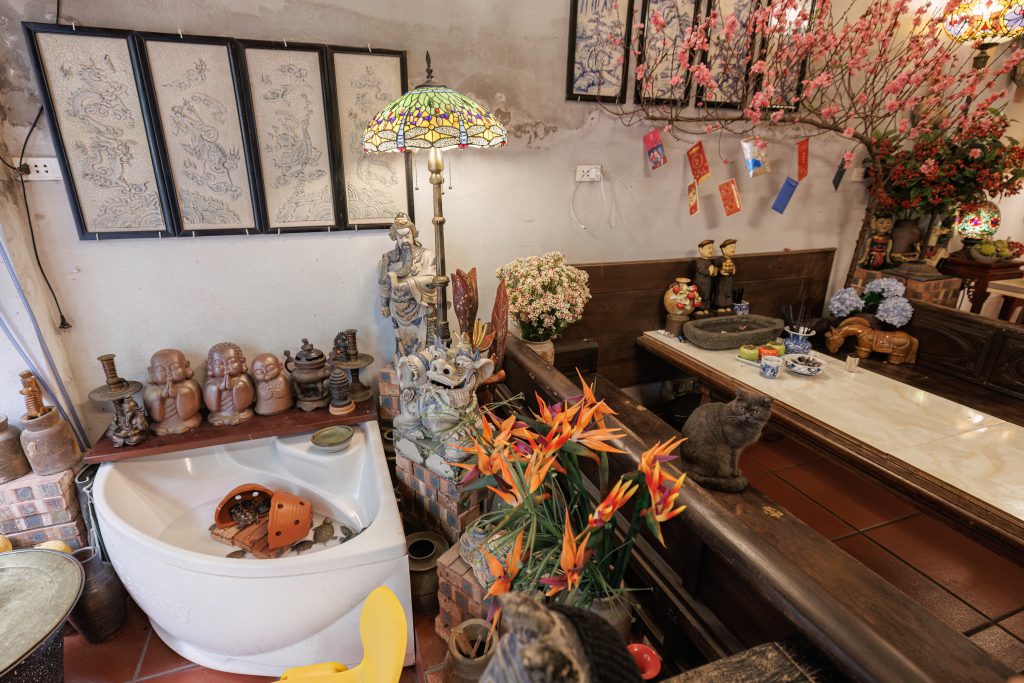
“This was just simply our living room,” Hoàng Minh Việt, owner of Bún Ziu Gánh explained, how while he spent time away as a merchant in the old quarters, his wife Quỳnh would tweak the unique decorations of the picturesque space.
As a musician by trade, Việt placed utmost trust in his wife’s taste. A self-taught visual artist, her vision led to an unconventional layout, one distinct from any other street food joint you might encounter Hanoi.
Seemingly minute details of the decor changes according to Quỳnh’s mood, all of which exist in harmony together with three heirloom blue-and-white porcelain-style paintings depicting mountainous landscapes — beloved collections of her maternal grandfather.
“She probably has the most memories associated with those three [paintings],” Việt divulges.
“Everything else needs to pass her quality control,” he insisted.
Eventually, Việt moved the bún riêu operation back home due to complexities of real estate in the Old Quarters, and Bún Ziu Gánh was born.
So what makes a bowl bún riêu truly Hanoian?
The name Bún Ziu Gánh itself is a reflection of its Hanoi-ness — ziu is a phonetic spelling of the word riêu as pronounced in the northern Vietnamese accent.
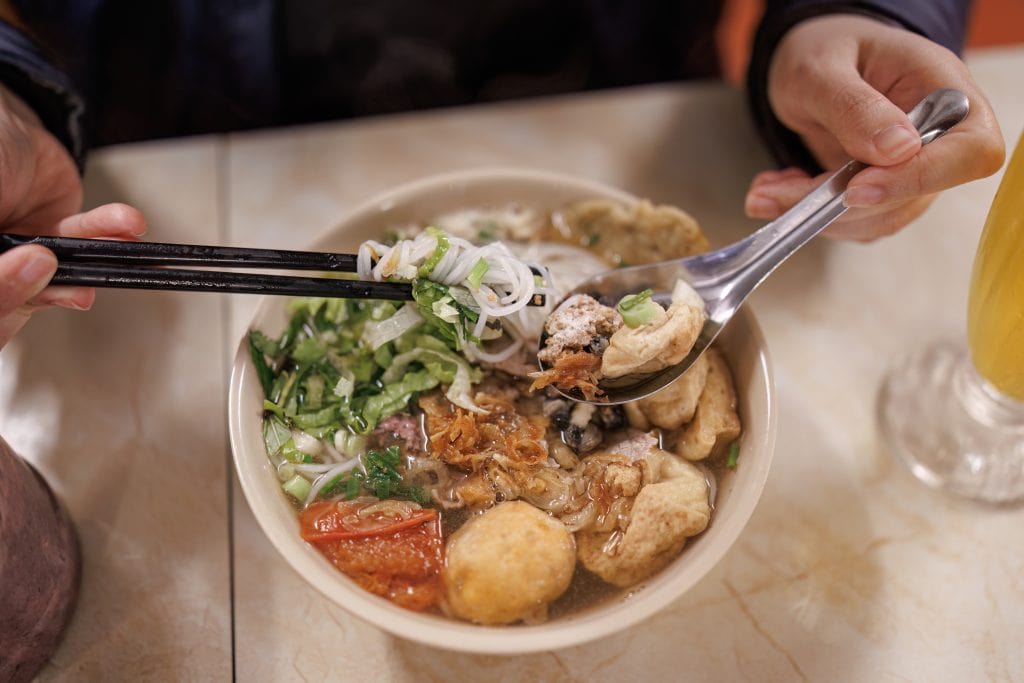
But what exactly is riêu? Best explained as an “essence” that floats to the surface of broth when pounded paddy crab paste is cooked with the acidity of tomatoes and unfiltered rice wine vinegar (dấm bỗng), most cultures mistake this as “scum”, an unwanted by-product that deserves to be skimmed away at sight.
Yet Vietnamese cooking treasures this rich-tasting denatured protein with great respect. Treated like egg whites, crab protein is gathered and seasoned as the dish-defining topping on bún riêu.
“These are the fundamental ingredients [to make bún riêu broth], along with pork bones, annatto oil and spices,” Việt explained.
Deep-fried tofu is another non-negotiable topping, while modern innovations such as giò tai nấm hương (pig ear and shiitake “sausage), ốc (boiled and de-shelled paddy snails), beef and Hải Phòng style fish cake are also available as any choice of combo.

And, for most locals, half a teaspoon or so of mắm tôm, Vietnam’s notorious purple shrimp paste, adds a great deal of desired umami flavor to a warm bowl of bún riêu. Pre-oriented individuals may detect a disagreeable aroma, but we’re of the opinion that a tiny dose is unlikely to offend.
A gastronomical side quest when you’re visiting the Temple of Literature
And perhaps of interest to visitors might be the neighborhood of Bún Ziu Gánh.
Once known as the village of Lương Sử, the area hosted Confucian scholars awaiting imperial examinations at Quốc Tử Giám (Hanoi’s Temple of Literature).
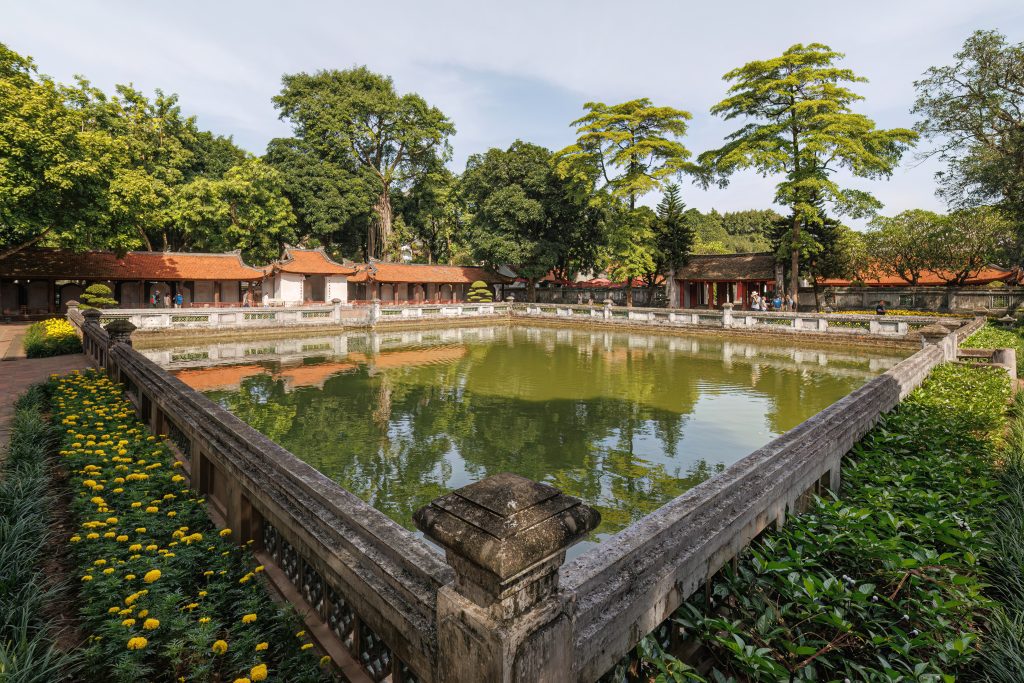
“[Because of that], the culture and general knowledge of our area’s inhabitants were higher than average,” Việt commented.
Yet he notes that times have changed despite the proximity from ancient campus grounds.
Today, little of the original academic past remains. Lương Sử C, now part of Ngõ (Alley) Văn Chương, is host to a typical Vietnamese bustling neighborhood. There’s a popular cháo sườn (pork rib porridge) and ốc luộc (boiled snail) joint, nail salons and a couple of florists.
“Oh by the way, a new pizza place opened last year,” Việt said.
“A lot of kids go there but, well, I’m already a regular at another pizza place!”