Being a (local) “expat” of Saigon (from Hanoi), like any other away from home, I occasionally catch a bout of homesickness and longing for Hanoi food in Ho Chi Minh City.
As the “fever” runs high, I would scroll endlessly through Google Maps, and since the pandemic, food delivery apps, searching for any place with a 3.8 to 4-star rating and various complaints lamenting the food is too bland (lacking salt and sugar). Always be wary of the ubiquitous “Hanoi” labels across HCMC since they will likely disappoint.
And Bánh Đúc Nóng Ngõ Hội Vũ is where I figured out this formula.

On a cool “winter” night, I came across the inconspicuous 3.9-star rated restaurant on Google Maps searching for a bow of Bánh Đúc Nóng out of homesickness.
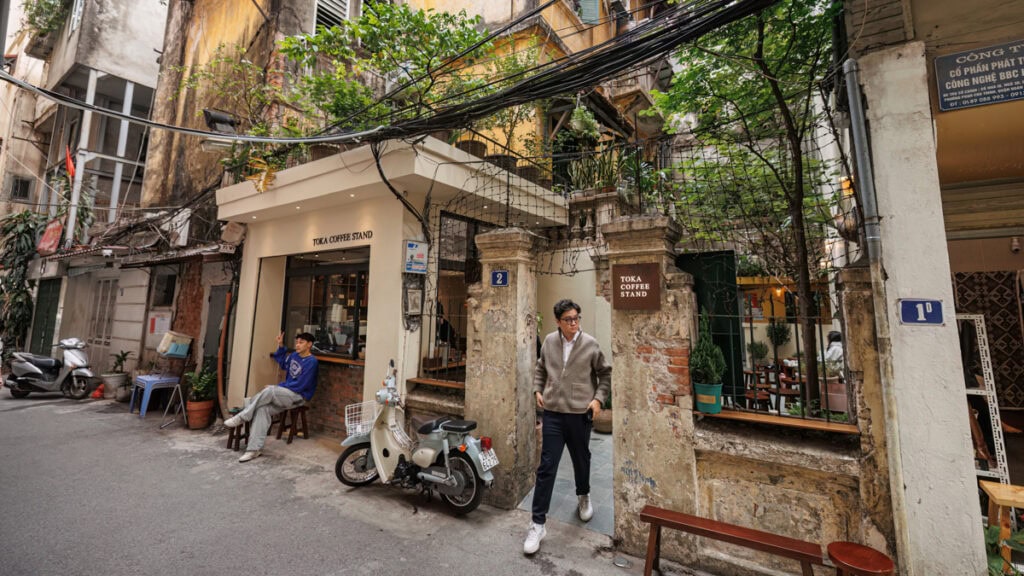
The restaurant is located on Hoa Huệ, a small street nestled next to the bustling Phan Xich Long, offering a similar atmosphere to Ngõ Hội Vũ, a tiny alley in Old Quarter after which it is named.
What is even bánh đúc nóng?

It might fly under the radar for most people here, but bánh đúc nóng is one of Hanoi’s humble comfort foods that are often taken for granted. Google “bánh đúc nóng” and you will find recipes and “top must try” but very little is written about where and when it started.
While I was researching the enigmatic bánh đúc nóng’s origin, I came across a story about a dish that was born out of necessitated frugality and pragmatic creativity.
Between the 60s and 80s, when Vietnam was still an isolated nation, vendors would salvage leftover batter from bánh cuốn (Vietnamese steamed rice rolls) to earn an extra living by steaming it into a soft “pudding”.
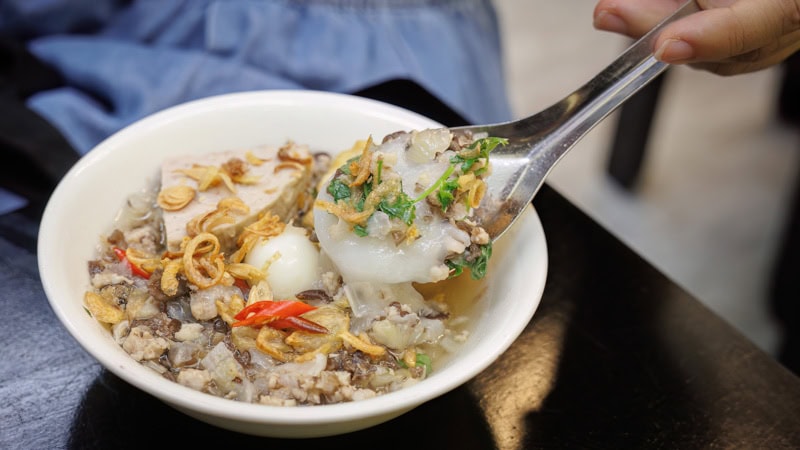
The toppings for bánh đúc nóng are essentially the same as bánh cuốn too. Minced pork, wood ear mushrooms, shiitake mushrooms and garnished with crispy fried shallots and cilantro.
The story seems plausible! Perhaps Saucefish could conduct an investigation to verify this upon another trip to Hanoi.
The right Hanoi flavor in Saigon, albeit with a local twist
Ngõ Hội Vũ’s bánh đúc nóng came with the toppings that look deceivingly southern, adding quail eggs and mung beans to the mix.
Hesitantly, I dug my spoon into the hot plastic bowl, and dissected the distinctive bouncy gooey texture. The spoonful of white goop melted easily with the smoothness of baby’s congee. It was indeed authentic, even down to the nước chấm (sauce)!
Although nước chấm everywhere uses the same ingredients: water, sugar, spices, and everything nice (fish sauce, rice vinegar) — the formula differences reflect the eating habits of each region. Southern sauce tends to be viscous, suitable for dipping, while northern dishes on the other hand call for a watery consistency that will turn the sauce into a soup.
The soup-like sauce easily clings to every scoop of hot bánh đúc adding a balance of salty, vinegary sweet, soothing away my weariness. A simplistic taste reflecting the subtle nuance of Hanoi’s cuisine.
Overall, it was a pleasant surprise, with localized adaptation that’s still able to retain the essence of bánh đúc nóng.
What else is on the menu at Bánh Đúc Nóng Ngõ Hội Vũ
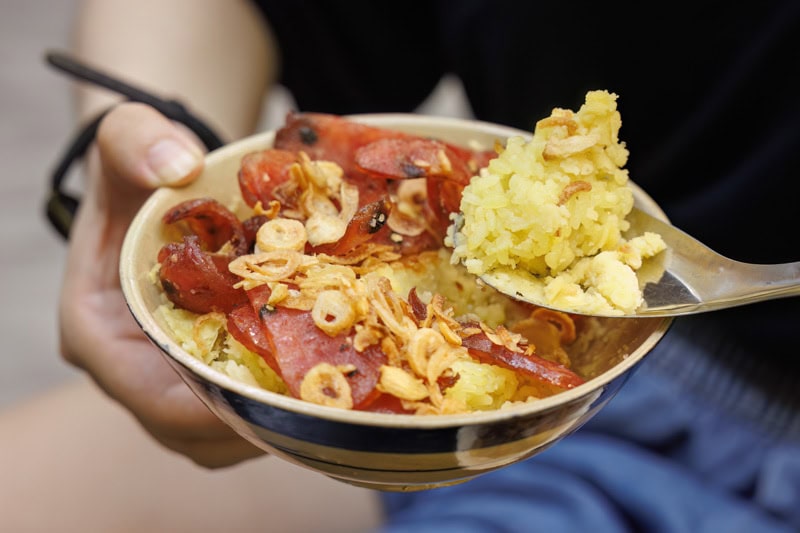
If you want something heartier, there is xôi xéo (sticky rice) with actual thin slices of mung bean paste — another rarity in Saigon. You can order it plains or with toppings such as chả chiên (fried Vietnamese ham) and lạp xưởng (Chinese sausage).
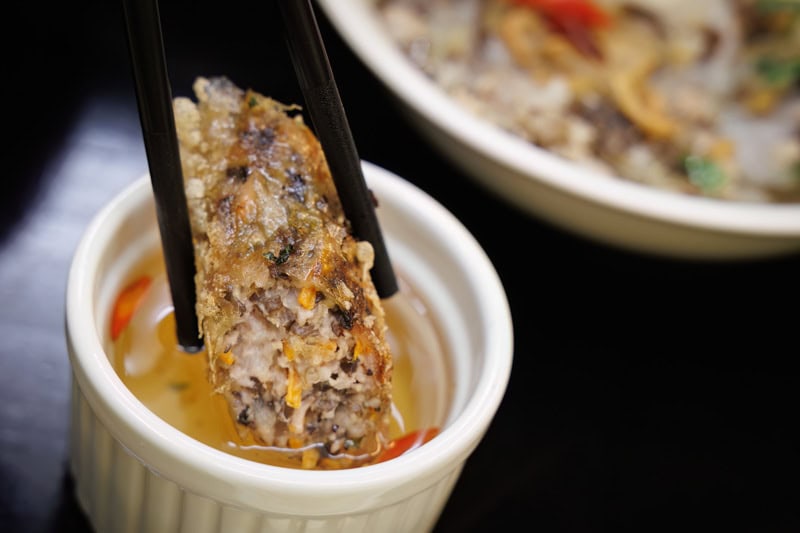

They recently added other rare treats such as bánh trôi (sticky rice ball with raw sugar cube filling) and nem rán (northern-style spring rolls) to the roster.
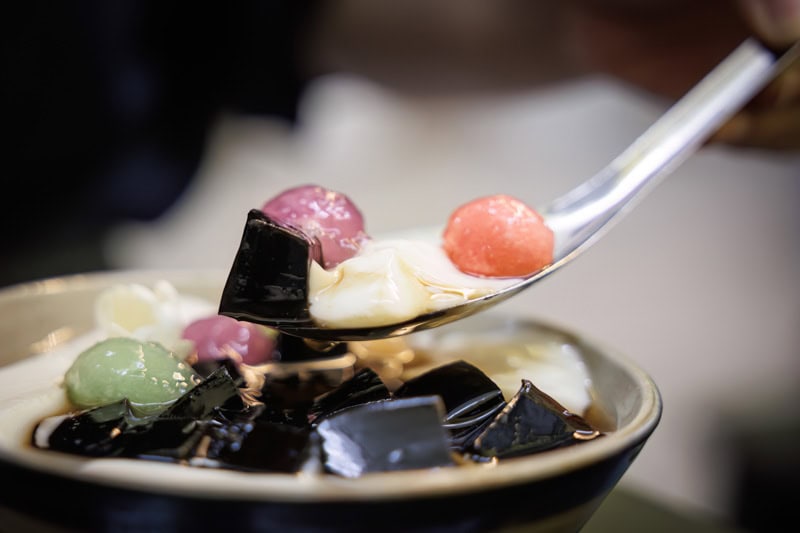
The weakest contender, in my opinion, is tào phớ (northern-style soy pudding). The soy curd is firmer and chunkier like Saigonese tàu hủ than the silky-smooth texture of its traditional northern counterpart. It’s not bad, but you can find a better rendition elsewhere in the city.
Ultimately, whether you are a lover of the capital’s “brutalist” approach to cuisine or simply want to try something new without lining up at the airport, Bánh Đúc Nóng Ngõ Hội Vũ serves a slice of nostalgia for those who seek subtle comfort of Hanoi in the middle of Ho Chi Minh.
However, if you are a food connoisseur looking for the absolute authentic taste of Old Quarter or simply prefer bold, colorful flavors, your mileage may vary. ¯\_(ツ)_/¯
(And if you’re wondering where’s the phở — to that I’ll say the only acceptable time to have phở is in the winter with crispy quẩy fritters. Check out Saucefish‘s list of 5 Local-Approved Phở Gà spots in Hanoi if you need some ideas.)

Bánh Đúc Nóng Ngõ Hội Vũ
- Address: 3 Hoa Huệ, Ward 7, Phú Nhuận District, Hồ Chí Minh City
- Opening hours: 6 AM–9 PM Daily