One of the first teas that Simple Tea Life Founder Seina Uchida had in Vietnam was a supermarket-bought tea she remembers tasted abundantly cheap and chemical-laden.
“I could not finish!” Uchida said.
Contrast this with the first sip of tea she had with friends from the far north of the country — a fragrant cup brewed with white tea leaves from the mountainous province of Hà Giang. It was bright, fruit-like, and softly sweet, completely unlike anything she’s experienced.
That very first cup of northern Vietnamese tea inspired her to begin a journey of curating and buying teas that are usually only acquirable if you “know a person who knows someone” — Vietnamese teas that are uniquely wild, organic, and delicious.
High-quality Vietnamese tea is the main attraction at Simple Tea Life
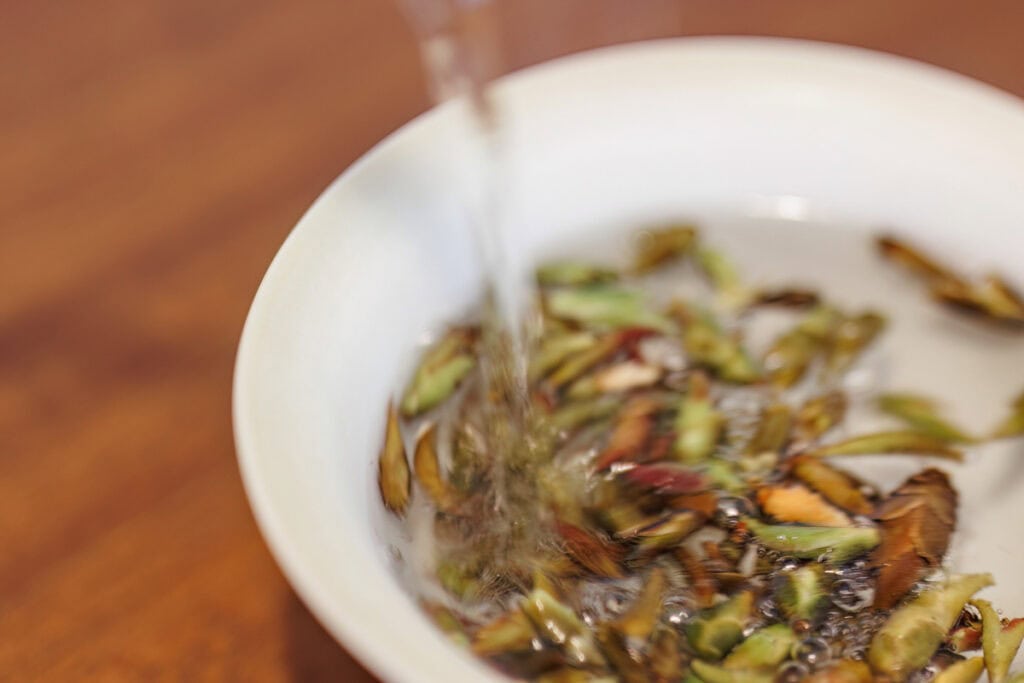
Dragon’s Claw is best brewed with hotter-than-usual water.
Founded in October 2023, Uchida offers a selection of eight tea varieties through Simple Tea Life.
You’ve had tea before, but you’ve not likely had something quite like the Dragon Claw, a white tea with a light, riesling-like body and clean finish, made with axillary buds harvested from the tea tree. In layman’s terms, axillary buds are adorable sprouts that emerge between the stem and branch of a tea plant.
The flavor is like fireworks. Strong and sweet on the first sip, evolving into something gentler and fainter before fully leaving the palette peacefully.

Sure, you’ve had tea before, like trà đá or trà nóng served aside a cup of coffee or with a meal. But tea as the star of the show like a fine medium-light roast or a glass of shiraz? This is on that level.
How Simple Tea Life began in Vietnam

Uchida, a Yokohama native, remembers attending elaborate tea ceremonies back in her home country. Grandiose affairs with elaborate tea pourings that often happen in purpose-built, special rooms, ceremonially rich in meanings.
Tea at such an establishment is at the heart of a culturally significant and revered ritual deeply entrenched in Japanese culture.
But when she moved to Ho Chi Minh City in 2021, she remembers just looking for a no-frills cup of tea in a local supermarket, which ultimately led to discovering abundantly cheap and chemical-laden packaged tea. For a while, Uchida resorted to bringing back teas from her home country.
In 2022, she connected with Vietnamese tea enthusiasts in the north and was invited to enjoy a cup of tea at the house of a newfound friend. It wasn’t Japanese, but it wasn’t the unpalatable supermarket concoction she’d turned away earlier.
The difference was compelling enough to send her on a journey of tea discovery.
Northern Vietnamese tea is grown as nature Intended
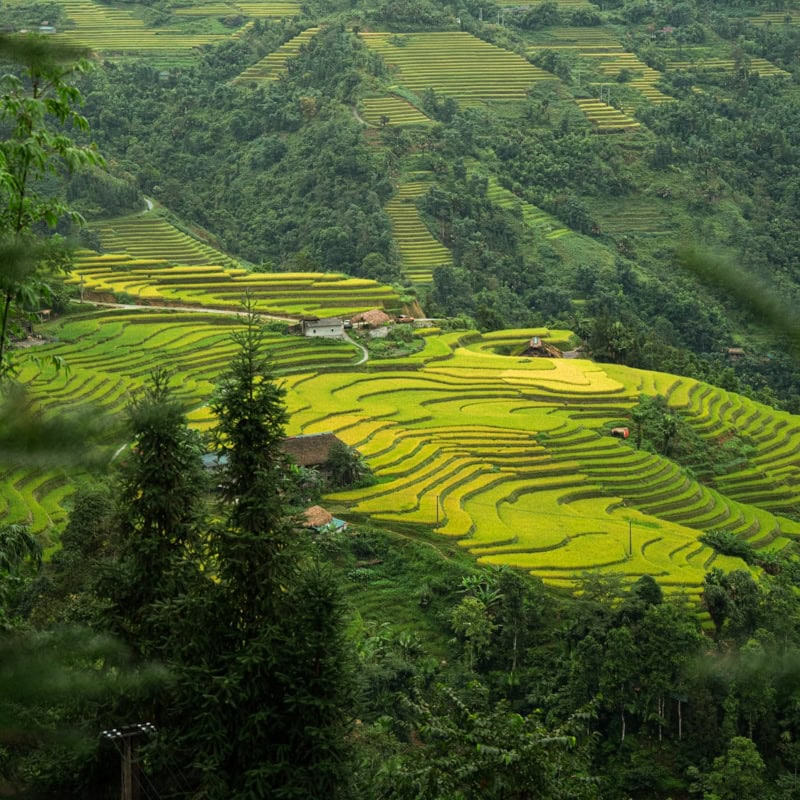
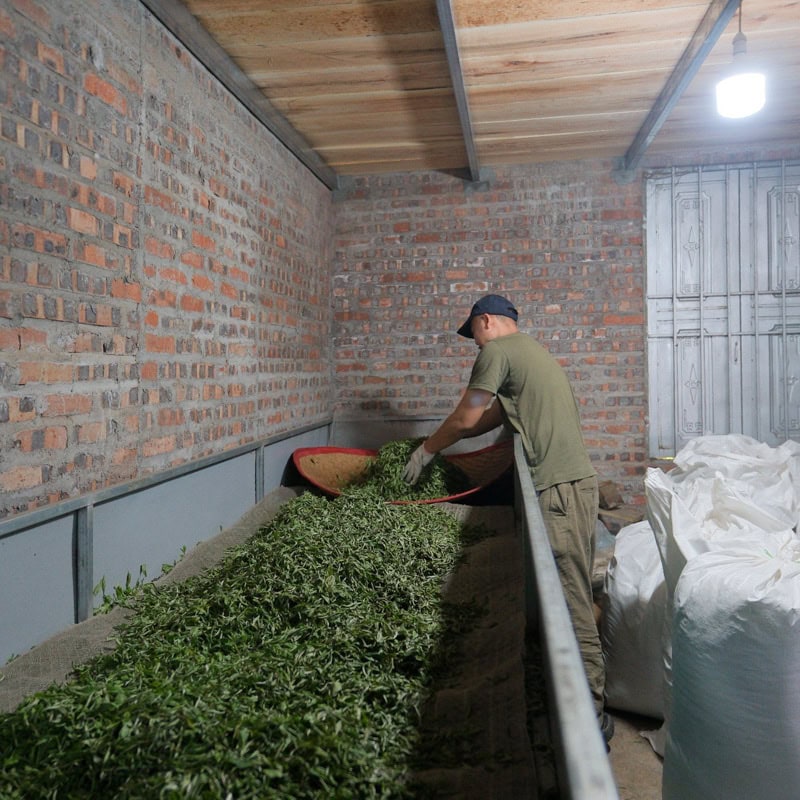
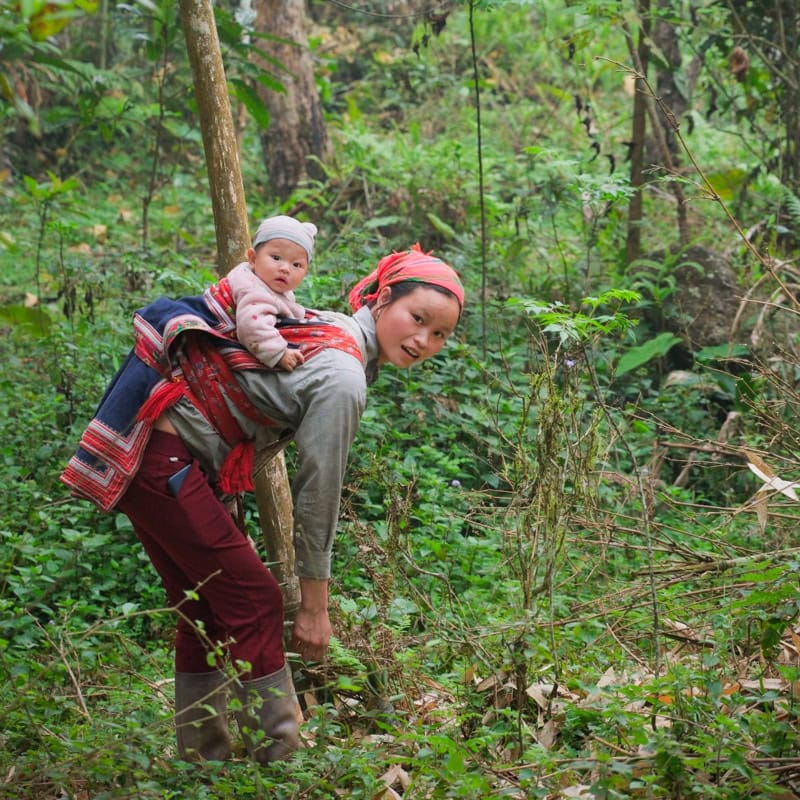

A glimpse at the life of farmers who harvest Simple Tea Life’s teas. (Images provided by Simple Tea Life.)
In the course of building her business, Uchida met and developed relationships with the Dao farmers of Hà Giang who today are the first people to process Simple Tea Life’s leaves.
Simple Tea Life’s products begin their life not on a tea farm, but on mature tea trees that are possibly hundreds of years old. Typically, these leaves are picked and shipped off to Mainland Chinese buyers for a small profit.
Then small bits might trade hands locally among local aficionados, like Uchida’s friends who first introduced her to Hà Giang’s caffeinated green treasures.
The product is accidentally organic — no pesticides or fertilizers because the trees have sat there for centuries.
When the need to blend tea with additional ingredients arises, farmer know-how and patience for a more laborious process is enough to protect the crops.
Simple Tea Life’s Lotus Red tea uses lotus petals that are notoriously hard to protect from fish that often nibble relentlessly. Instead of impregnating ponds with chemicals to kill fish and hasten the process, farmers drain the land the flowers grow on periodically.
“A lot of this is super labor intensive,” Uchida adds.
Simple Tea, Simple Life
Uchida added that many tea farmers she’s met are at subsistence level lives, and the economics are pushing a lot of the community to reconsider their business — tea being a marginal amount of everyone’s bottom line, it would be a sensible business to get out to focus on other crops.
Uchida decided to do something to let the world know about the region’s farmers who were and are still at risk.
“The trigger for me was that I realized that the tea industry [in the north] is undervalued,” she said, prompting her to create a company and a revenue model that aims to pay farmers more than what they might make otherwise for their teas.
“[And] also, to share their story to my customers,” she added
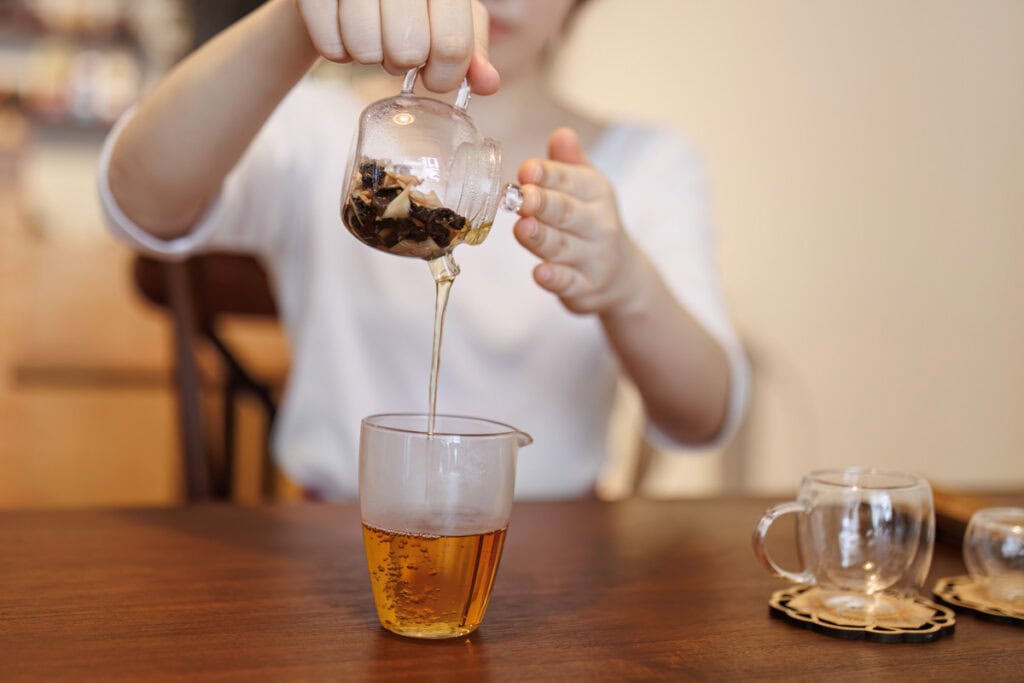
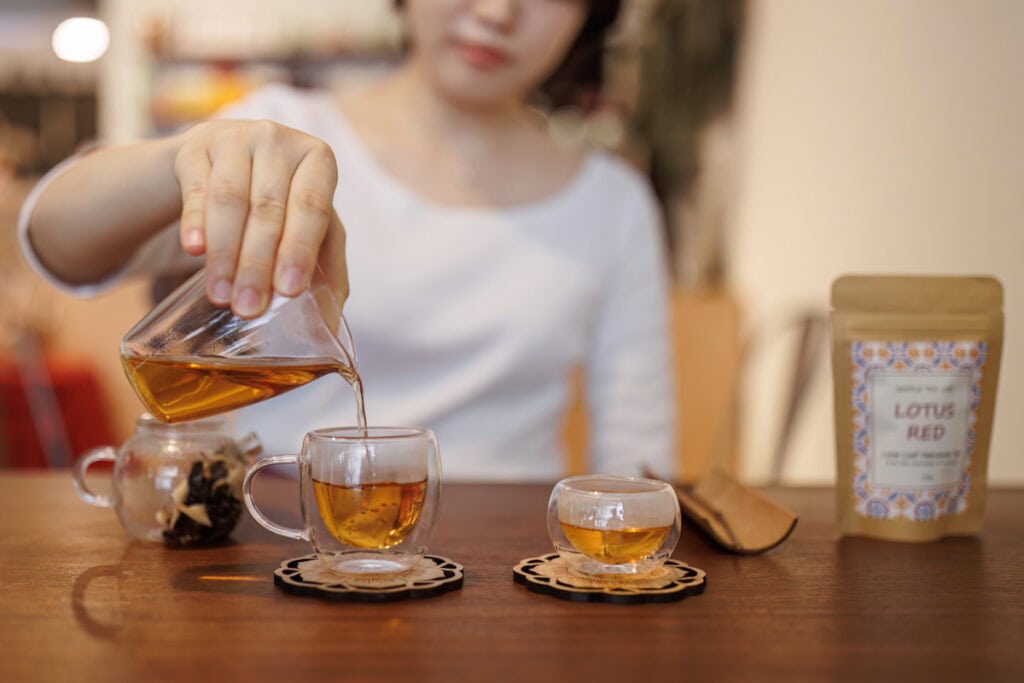
Simple Life Tea’s founder Seina Uchida brews a Lotus Red tea.
It’s a powerful mission and a story, one that has sent Uchida down the rabbit hole from which she emerged from with the idea for Simple Tea Life.
But, contrary to the traditional Japanese tea ceremony, Uchida believes strongly that tea can and should be uncomplicated — hence the name.
While still recognizably tea, it may be hard for the drinker to pinpoint how and why this is different from the teas they’ve had before. It’s the same for Uchida. When asked what the difference is between Simple Tea Life’s teas and the supermarket brew all those years ago, Uchida said it’s noticeable in the flavor as much as it is in the effect on the drinker.
“I feel if you drink it, your body will feel different,” she said.