



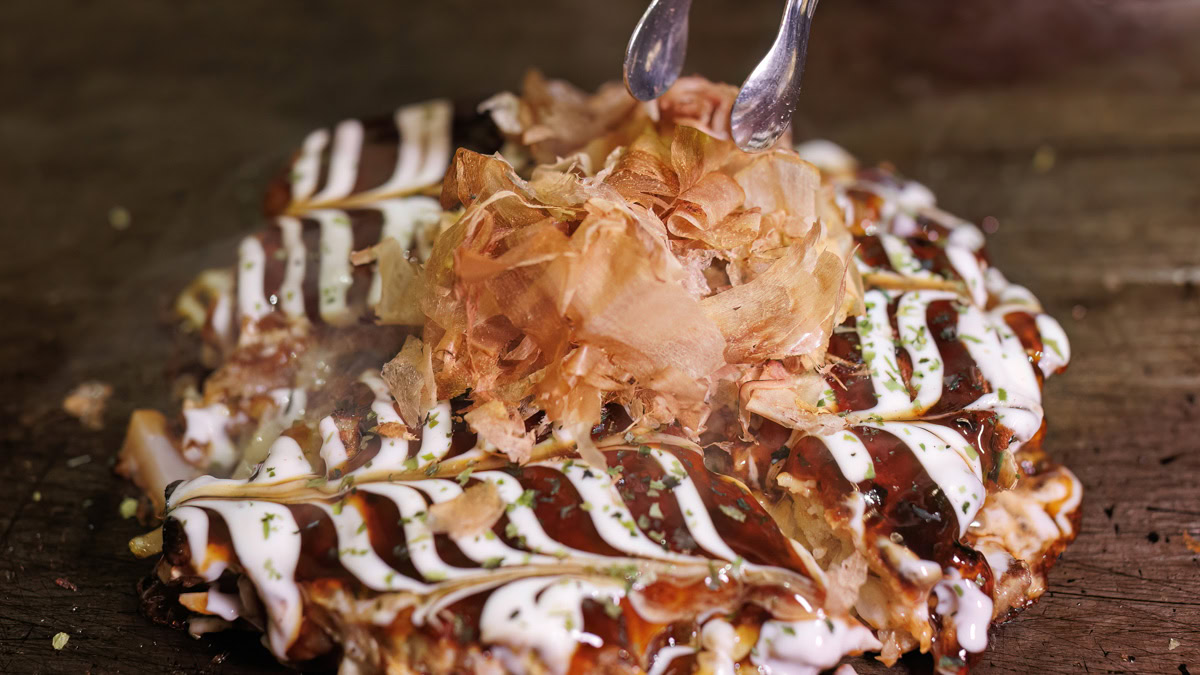
The need for an unhealthy but satisfying Japanese dinner comes naturally as a coping mechanism thanks to growing stresses in one of the fastest-growing cities in Southeast Asia. We’re sure someone you know is going to handily suggest a ramen joint like Danbo and Chikura for a quick fix in Lê Thánh Tôn’s Japantown.
But what if you need some added visual excitement along with privacy for a group of friends to catch up?
Indulge in carbohydrate-heavy Japanese pancakes in Ho Chi Minh City’s Japantown
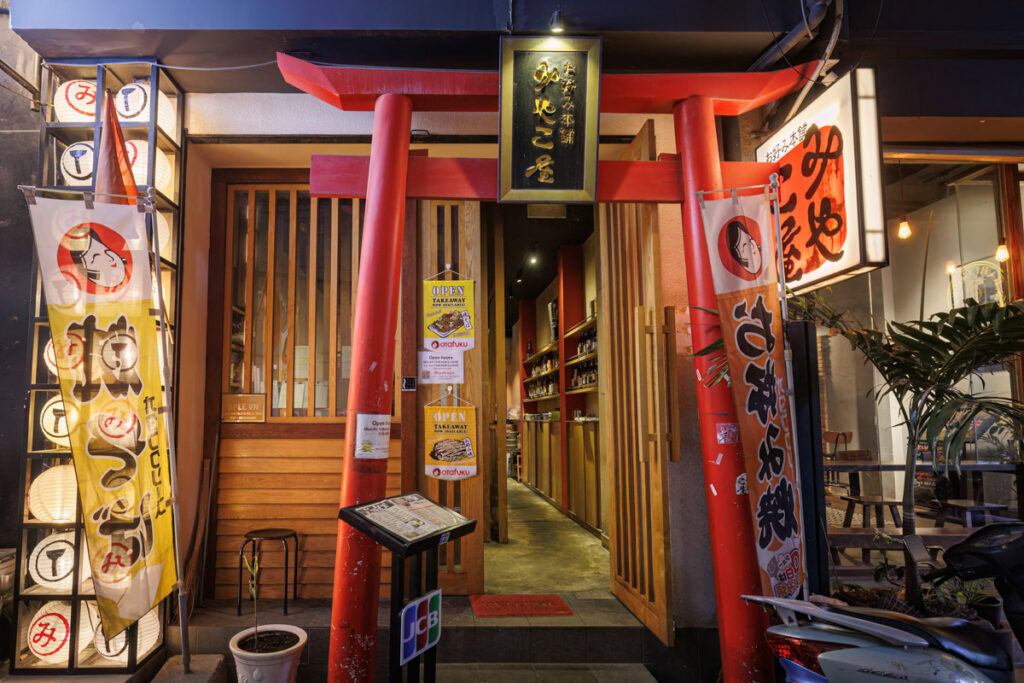
Located in the same alley as Vietnam’s first Pizza 4P’s outlet, Miyakoya may be one of the only okonomiyaki senmonten (専門店, specialty restaurant) in Saigon that churns out tasty dressing-covered Japanese pancakes at every table. Each one has a teppanyaki grill conveniently attached.
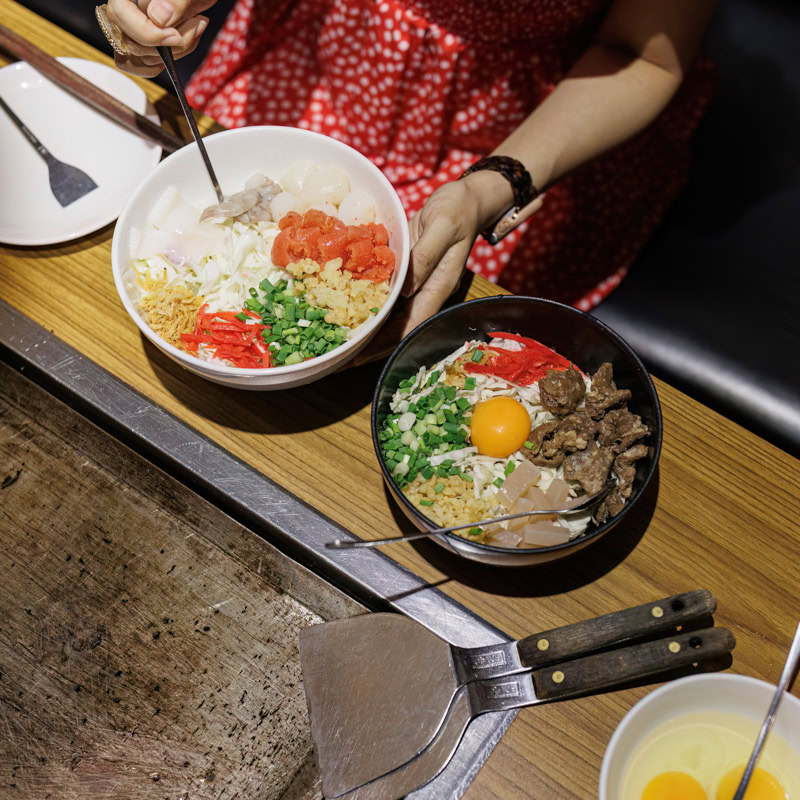

Okonomiyaki isn’t a complicated dish. Flour is mixed with water, chopped cabbage, proteins, eggs, tenkasu (天かす, tempura scraps), and pickled ginger. Miyakoya also adds konnyaku and spring onions to the mix. Once the pancake forms a nice crust, it’s drizzled to a photogenic state with Japanese mayo and Otafuku’s okonomiyaki sauce.

The sauce itself is best described as a fruitier-tasting relative of Worcestershire sauce. It pairs perfectly with Japanese mayonnaise in a wide variety of Japanese-style pancakes and stir-fries.
Dried seaweed and bonito flakes are then added as a final garnish.
Quick history about Japan’s favorite okonomiyaki sauce Otafuku
You’ll notice that most Japanese okonomiyaki restaurants feature the caricature-like face of a cheerful woman, Otafuku-san, whose face and expression represent many ideals of Japanese courtesy. Linguistically, the word Otafuku (お多福) means to bring joy and happiness in Japanese.
Here’s a Japanese cultural tidbit — Otafuku also happens to be the colloquial name of goddess Ame no Uzume no Mikoto in the Shinto religion, was asked to soothe the sun goddess Amaterasu with a laughter-inducing dance when Amaterasu became angry with her ever-chaotic brother, the storm god Susanoo.

Shortly after World War 2, Hiroshima vinegar maker Seiichi Sasaki took on the name for his company which today makes Japan’s most popular Okonomiyaki sauce. Otafuku is now also synonymous with what Hiroshima natives consider an authentic okonomiyaki pancake.
Yakisoba, Half-kilo Mount Fuji Steak, and Tokyo’s infamous Monjayaki pancake

High-heat cooking means delicacies such as yakisoba noodles come with a charred, smokey fragrance.
Most pancakes, omelets, and yakisoba at Miyakoya come with the option of squid, shrimp, pork, and other proteins. We did opt to try Miyakoya’s Half-kilo Mount Fuji Steak which was a nice protein-forward side dish.
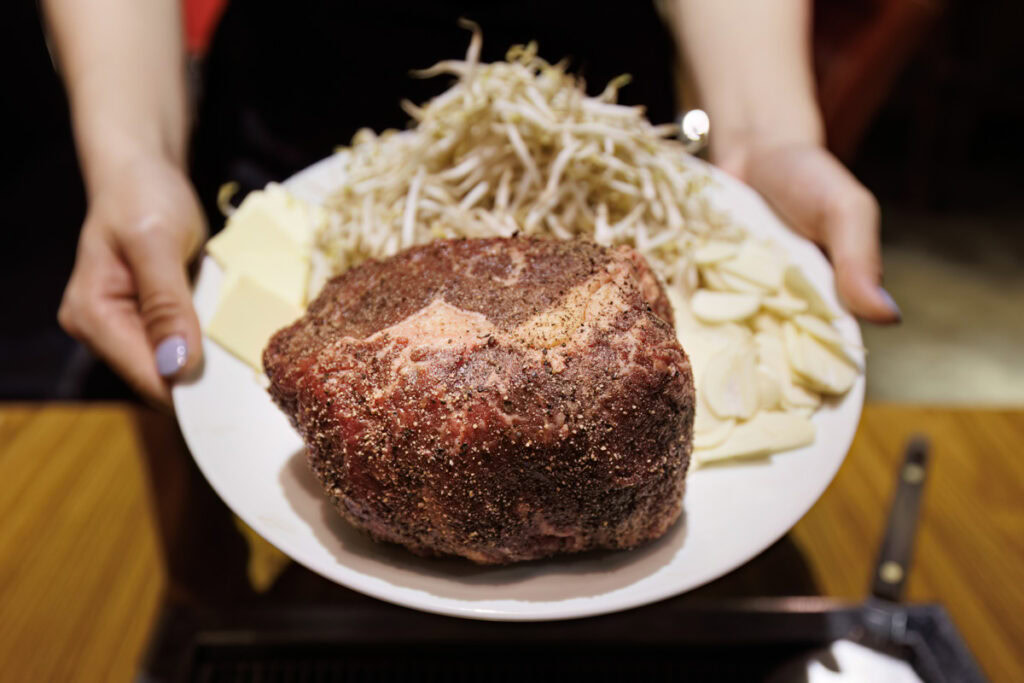
Miyakoya Saigon’s half-kilo “Fuji Steak”.
What came as a real surprise was Monjayaki, a runny pancake from Tokyo’s Tsukishima District. Interestingly, this is a 100-year-old, man-made island known for other exotic antique dishes such as locusts preserved in soy sauce.
Monjayaki is not a looker — it’s defo not one of those regional delicacies that looks appetizing at first sight.


The process of making Monjayaki at Miyakoya is not a fancy sight.
Cabbage and other ingredients such as seafood are finely chopped before being added to very runny pancake batter. With the help of a pair of teppanyaki spatulas, the mix is fried hastily on the grill and further pulverized, accompanied by the musical rhythm of spatula-on-teppanyaki action.
Once the right fineness of the ingredients has been achieved, more runny batter is added to provide a good and somewhat icky-looking base for cooking.
The paper-thin edges of the pancake mix then become somewhat burnt and caramelized, and diners use a specialized Moji-bera (文字ベラ Monjayaki Spatula) to scoop up the charred bits. It’s akin to eating the burnt ends of a grilled cheese sandwich, albeit not a dairy product but rather a maillard browned batter that gets umami from veggies, seafood, and meat.

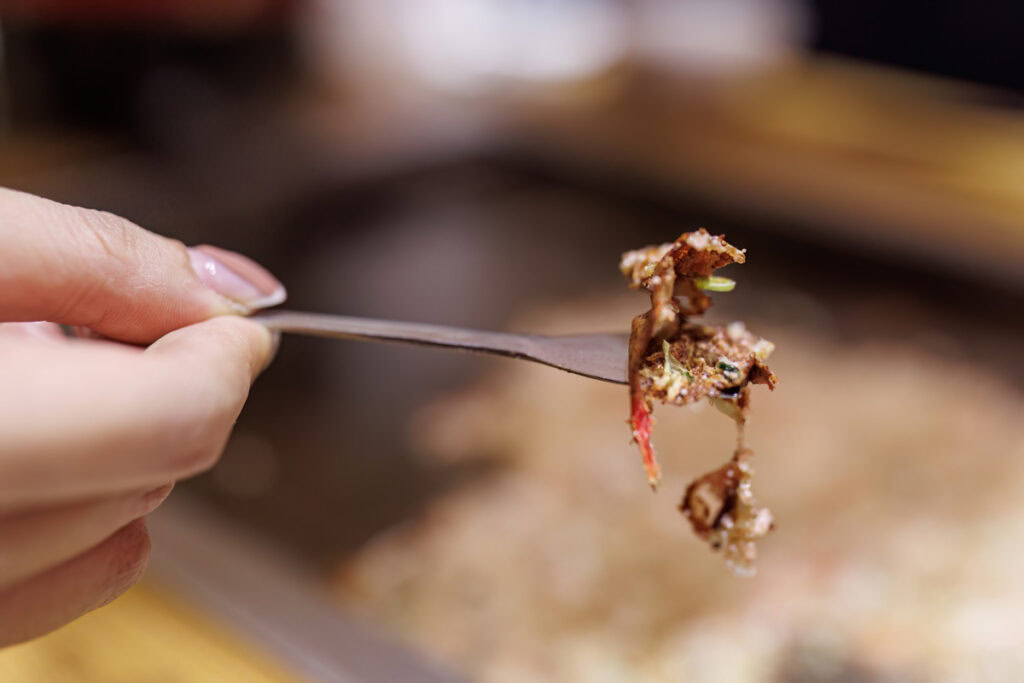
Crispy bits of Monjayaki packed full of flavor.
Organizing a Japanese-style ‘grill party’ at Miyakoya is no challenge
If privacy is important, Miyakoya offers several group table seatings conveniently divided by bamboo curtain blinds.
Although Miyakoya may look like a do-it-yourself spot, you’re not expected to cook anything on your own, though the option exists. A staff member will be assigned to your table to do the sizzle work. Save that energy for socializing — you’re in Japantown so an afterparty is expected!

MIYAKOYA
- Address: 8/6 Lê Thánh Tôn, Bến Nghé Ward, District 1, Ho Chi Minh City
- Opening hours: 11AM–2PM, 5–10PM
- Miyakoya’s Facebook Page
SAUCEFISH is committed to honest gourmet and lifestyle content creation but is not responsible for unexpected closures and changes to the operating hours of featured establishments. Visitors are advised to contact the establishments in advance if possible if a visit is of great importance.


