Here’s an informal preface. I’m not one of those folks one might call a weaboo or otaku. But neither do I have any measurable bias against one.
Nonetheless, I still find comfort in identifying elements of Japanese subculture in cities away from its origin country. Recently, I wrote about a penthouse ‘twin restaurant’ in Ho Chi Minh City offering some of the city’s tastiest yakitori skewers and creative omakase-style sushi. Some call it a homey feeling that can be found in all things Japanese — I call it a refreshing microcosm within a city that’s already full of great food and crazy everyday experiences.
The same type of curiosity led me to discovering a Maid Cafe in Hanoi.
A Japanese-style maid cafe at the south of Hanoi’s West Lake

Those familiar with at-home and Maidreamin in Tokyo’s Akihabara ward will feel a sense of familiarity when stepping into Soru Maid Cafe at 84A Trấn Vũ Street in Hanoi’s Ba Đình Ward.
The immediate vicinity itself is quaint and peaceful just like most of Hồ Tây’s shoreline. Middle-aged Vietnamese uncles fishing as a daily recreational activity, with typical Vietnamese-style cafes and grocery shops around the corner.
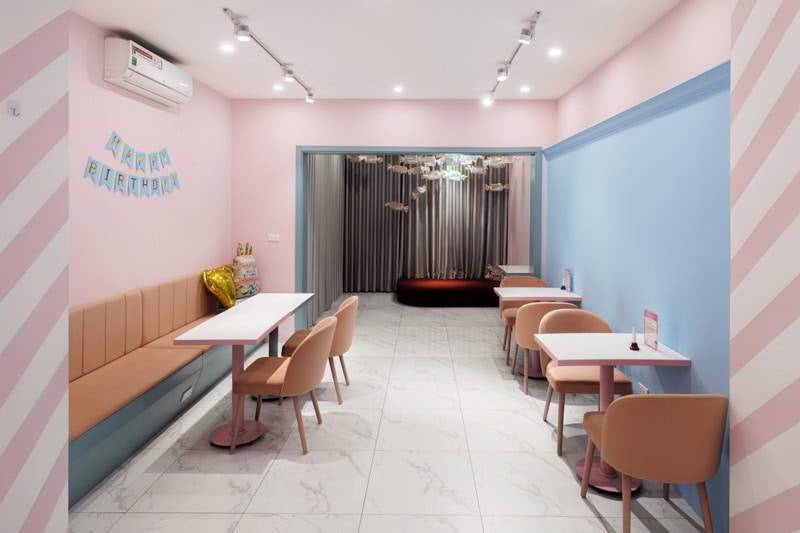
But what’s peculiar is how this pink-on-baby blue-toned maid cafe is hidden in an old apartment block just like one might expect in Hanoi’s old quarters (think Đinh Café and its half-century-old egg coffee), and HCMC’s infamous Café Apartment on Nguyễn Huệ boulevard.

Upon invitation, I joined Thịnh, a Vietnamese highschooler, for what he describes as a typical Wednesday after-school session at Soru Maid Cafe together with his schoolmates — he assured me that it was “very much the same as in Japan, but somewhat different”.
Cringey to some but this maid cafe experience is adequately Japanese to many

We were greeted by Shio, or Shiohara in full, one of Soru’s maids-on-duty.
“Shiohara means a salt-plain in literal Japanese and has a nice ring to it,” Shio, explaining the origins of the word Shio & Hara.
“And the world Shio in reverse is Oshi, like in Oshi no Ko,” she giggled while elaborating.
The manga series chronicles the fictional story of a Japanese Idol’s gynecologist who reincarnates as the child of the Idol after being murdered by an obsessive fan on the night before he was supposed to assist with the delivery. Bizarre, and a lot more than a mouthful, but exciting.
Etymologically speaking, the word oshi, which originates from an i-ending conjugation of the verb osu, meaning “to push” in Japanese, is now a subcultural slang term referring to an idol that a fan is “biased for” and thus motivated to “push” to increase his or her popularity.

“Would you like to be a cat today? It’ll make your day fabulous!” Shio said to Thịnh, before proceeding to adorn him with a fluffy black cat headband.
After making our food orders, I joined both Shio and Thịnh in an eye-hand coordination game involving catching fish with a magnetic rod. Irritating considering how the plastic fish only open their mouths at near-random pattern-based intervals. Anyone not into mechanical toys can also opt to stick to classics like Uno, exploding kittens, and Jenga.
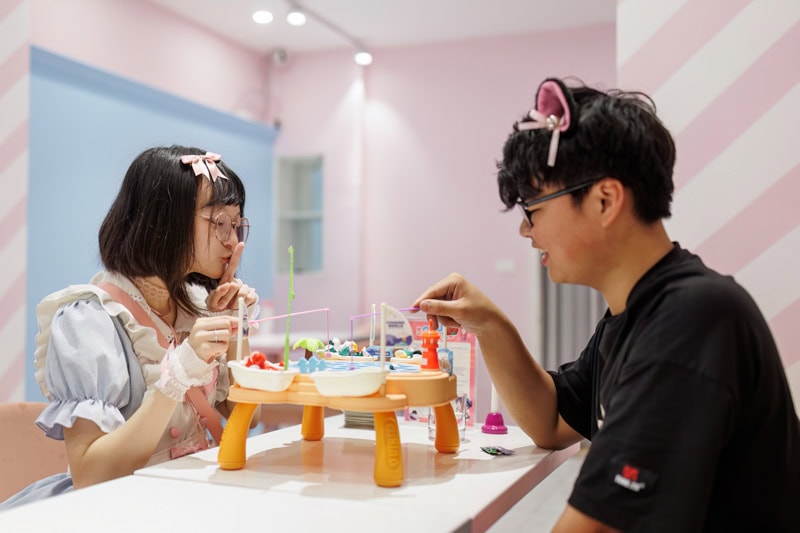
“You don’t have to pay to play games with us!” Shio explained. In Japan, visitors would have to pay an additional fee to play board games with maids.
After breaking the ice, me and my younger newfound buddies chatted up about various aspects of everyday Vietnamese life and how Thịnh and his classmates have made Soru Maid Cafe their usual haunt.
“These days, the average acceptance rate for the English specialized programme at a ‘school for the gifted’ like Chu Văn An and Nguyễn Huệ High school is only about 1 in 25 candidates,” Thịnh explained, worryingly precisely, which was not a topic I might imagine coming out of a sixteen or seventeen year old.
“Between the pressure from family and education, there’s no emotional support [sic],” he remarked.
Understanding the needs of the city’s open-minded youth populace, Soru Maid Cafe’s team started giving out fliers at local universities when they first opened in late December 2023.

“Soru Maid Cafe came into existence to be your soulmate when you need a listening ear!” Shio cheerfully remarked, with yet another dose of language puns.
Soru Maid Cafe’s menu is typical maid cafe-style interactive fun
Shortly after me and Thịnh began an unrehearsed discussion about how his days at APAX Leaders were productive despite the country’s biggest recent English Centre funds mismanagement saga, the food arrived in typical Japanese maid cafe-style fashion to lighten the mood.

“What would you like me to doodle today?” Shio asked sweetly while remarking how the last customer demanded latte art of Bangkok’s skyline on his milk foam tea — an odd request for a maid cafe in Vietnam.
I played nice and asked for a bear holding a camera, which she promptly completed with finesse.
Thịnh then asked for a nyan cat on his omurice.

My meal experience at Soru Maid Cafe which consisted of rabbit-shaped Japanese rice, tomato-and-lettuce salad, Japanese curry, and Tonkatsu topped with humble amounts of American cheese was fulfilling. It wasn’t mind-blowingly, but hey, you come to a Maid Cafe for the experience and companionship don’t you?

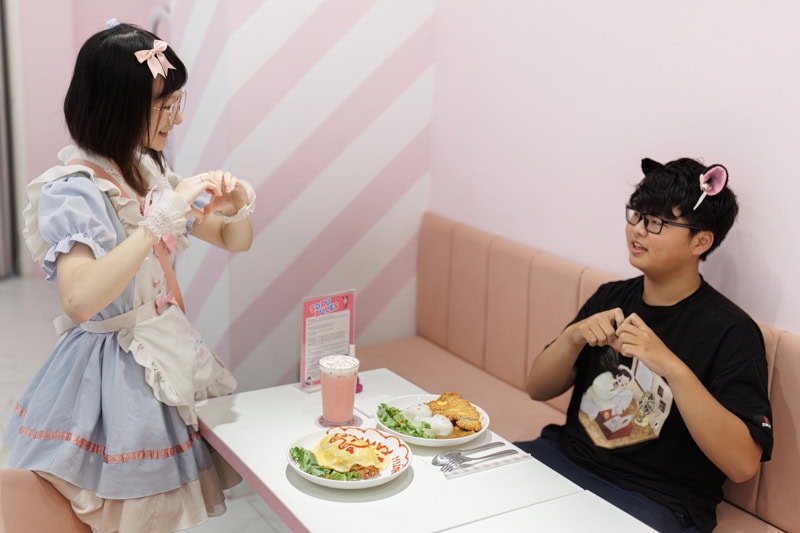
The actual eating only started after we proceeded with a well-known maid cafe ritual.
“Oishikunare, moe, moe, moe, kyun!” Shio recited, and both me and Thịnh were invited to do it together for a second time. The spell promised to make the food even better and I bet it did.
A Japanese-style maid cafe that’s true to its roots but adaptable to local tastes
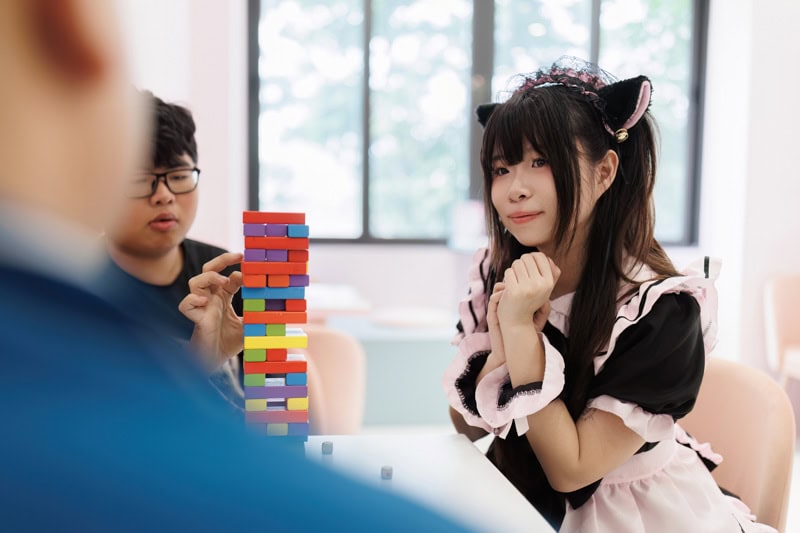
The icing on the cake was meeting Meira, Soru Maid Cafe’s “Legendary Maido [sic]”.
Dressed in a black maid costume distinct from her juniors, I asked Meira, whose name means light in Hebrew, what she did to deserve the grand title. She turned out to be one of the founders of the cafe, and a semi-retired cosplayer too.

While the senior highschoolers took Fuji Instax photos with the other maids Lily & Winnie, I had a quick chat with Meira to understand the psychology behind running a maid cafe outside of Japan. Don’t some locals harbor negative opinions about the business?
“There’s always two sides to something, but I believe that every maid at Soru has been trained to make every experience a unique one,” She explained.
Finding the right candidate for Soru’s maid isn’t child’s play either. From rules to prevent harassment and lightening the “kawaii factor” that’s a staple in Japan but often considered cringe in an average Hanoian perspective, Soru’s shitsuji, or head butler, Damian, also emphasized the importance of helping every maid “develop an individuality and agreeable accent”.
“It’s all about healing, and once we’ve healed you, you heal us!” Winnie added.
Soru is planning monthly live shows to extrapolated maid cafe culture
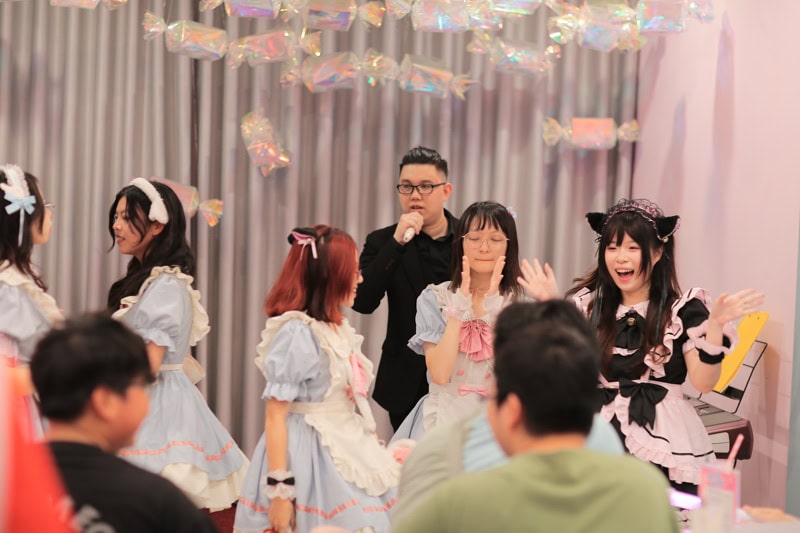
The end of May 2024 also marked the first Talent Show organized by Soru Maid Cafe. For just VND50,000, showgoers were treated to the visual delight of Soru’s contingent of maids showing off their musical talents and more.
Upon discovering that every sorumaid has a set of personal social media handles, I asked bluntly if Soru Maid Cafe plans to idol-fy the experience. Meira smiled and I was invited to make guesses.
Considering how this part of the world loves idols, wouldn’t this be a convenient convergence?